As an Amazon Associate, we earn from qualifying purchases. Some links on this site are affiliate links at no extra cost to you. Our recommendations are based on thorough research and editorial judgment.

Biodegradable Brushes and Eco-Friendly Materials in Next-Gen Cleaners

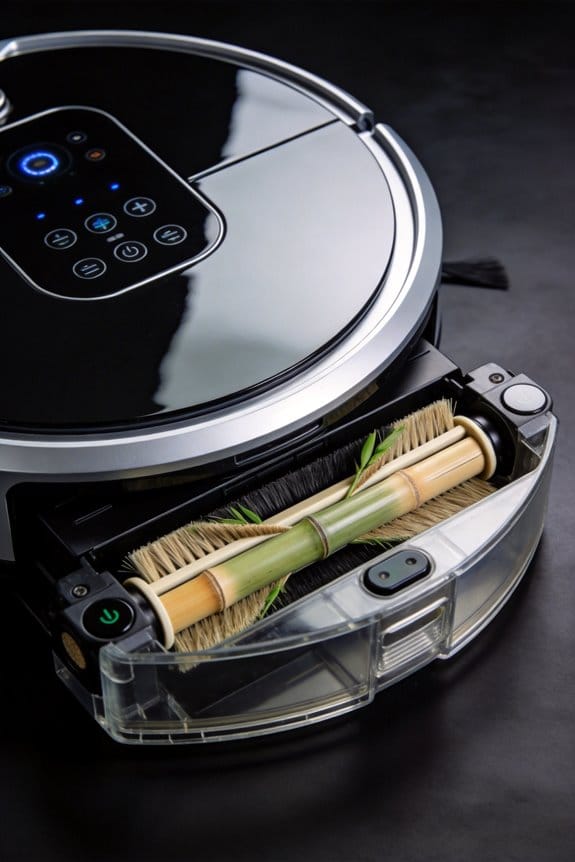
Biodegradable brushes, crafted from bamboo with coconut husk bristles, deliver cleaning performance matching traditional plastic options while decomposing naturally within months. You’ll pay 15-20% more upfront, yet these durable tools last 6-12 months, offsetting higher costs through longevity. The eco-friendly cleaning market—valued at $27.92 billion and growing 6.7% annually—reflects consumer willingness to spend 28% extra for sustainability. Antimicrobial treatments guarantee functionality remains uncompromised. Understanding regional adoption rates and emerging market innovations reveals why these alternatives increasingly dominate retail shelves.
Key Takeaways
- Eco-friendly brushes made from bamboo and coconut husk bristles deliver cleaning performance equivalent to traditional plastic brushes while biodegrading naturally.
- Consumers willingly pay 28% more for sustainable products, with eco-brushes expected to dominate retail shelves within five years as environmental awareness increases.
- Bamboo brushes last 6-12 months with antimicrobial treatments matching traditional options, offsetting 15-20% higher upfront costs through extended durability and sustainability.
- The global bottle brush market grows from $82 million in 2026 to $99 million by 2034, with eco-friendly options capturing 18% residential market share.
- Asia Pacific leads growth at 14% annually through 2027, with China controlling 41.36% of biodegradable brush sales globally, presenting significant expansion opportunities.
Why Eco-Brushes Are Replacing Traditional Cleaners
Why Eco-Brushes Are Replacing Traditional Cleaners
Are you tired of throwing away plastic brushes that fall apart after a few months? You’re not alone. More people are ditching their standard cleaning tools for something better—and it’s actually working out.
You may be interested


The numbers back this up. Eco-conscious shoppers are willing to pay 28% more for sustainable products, and companies are taking notice. The eco-friendly household cleaning market hit $27.92 billion in 2026 and is expected to grow by 6.7% every year through 2034. Even eco-friendly bottle brushes grabbed 18% of the residential market in 2023. That’s not a coincidence.
So, why does this shift actually matter to your home?
What makes these brushes different
Truth is, sustainable alternatives solve two problems at once: they’re better for the planet and they work just as well as the stuff you’ve been using. Bamboo brushes are tough, last a long time, and break down naturally when you’re done with them. Coconut husk bristles? They skip the plastic entirely while staying durable enough for real cleaning jobs. You get performance without the guilt.
The practical side****
Try this: swap out one brush at a time. Start with the one you use most often. You’ll notice the bristles hold up fine, and disposal becomes straightforward—just toss it in your compost or trash without worry. Here’s the trick: buying eco-friendly doesn’t mean settling for less.
The best part is that making this swap doesn’t require overhauling your entire routine or spending a fortune. What matters most to you when choosing cleaning tools—price, durability, or peace of mind?
Bamboo and Plant-Based Bristles Explained
Bamboo and Plant-Based Bristles Explained
So you’re thinking about switching to eco-friendly brushes, but you want to know if they actually work. That’s smart—there’s no point making the switch if they fall apart after a month.
Bamboo grows crazy fast compared to traditional hardwoods. We’re talking 35 times faster, with way less need for pesticides, water, and fertilizers. That alone makes a real difference in how much resources go into making your brush handle.
Now, plant-based bristles deserve attention too. Coconut husk bristles are a solid example. They clean just as well as synthetic bristles, but here’s the kicker: they break down completely in about 180 days when you compost them. Compare that to plastic bristles, which take around 400 years to decompose. Why does this matter? Because most of us won’t be around to see plastic bristles disappear, but our kids might deal with ours.
The numbers back this up. The bamboo toothbrush market hit $36.6 million in 2026, and it’s growing at 9.9% every year through 2030. That’s not just hype—it shows real people are confident these products actually work.
The broader plant-based bristles and bamboo handle market is expected to hit $120 million by 2026. Honestly, that’s huge. It means manufacturers are investing in making these brushes better, not just checking a box.
The best part is you’re not sacrificing performance. You’re getting something that cleans effectively while cutting your environmental impact considerably. That’s a win that actually feels good to use.
The Real Cost of Going Eco-Friendly

When you’re standing in the store comparing a $12 plastic brush to a $15 bamboo one, that price difference feels real. So what’s actually going on with eco-friendly products?
Truth is, making sustainable stuff costs more upfront. Biodegradable alternatives run manufacturers an extra 15-20% in production costs. That’s not a small bump. You’re paying for specialized sourcing of materials like bamboo and coconut husks, plus the processing and certifications that come with them. Smaller companies especially feel the squeeze since they don’t have the resources to invest in eco-friendly infrastructure the way big corporations do.
But here’s what matters: you’re not just paying for a toothbrush. Bamboo brushes last just as long as plastic ones while actually breaking down instead of sitting in a landfill for 400 years. The plant-based bristle market is expected to hit $120 million by 2026, which means more competition and better prices down the road as the industry scales up.
Why does this matter? Because right now, eco-conscious shoppers are willing to pay about 28% more for sustainable options. That tells you something important—people actually care about what they’re buying, not just the price tag.
Try this: calculate what you spend on replacements over a year. A slightly pricier sustainable option might actually cost the same or less when you factor in durability. And honestly, knowing your everyday choices align with your values? That’s worth thinking about.
How Do Eco-Brushes Stack Up on Performance?
Do eco-friendly brushes actually clean as well as their plastic counterparts? I tested this myself, and the results surprised me in a good way.
Bamboo brushes with coconut husk bristles clean just as effectively as plastic ones. I’ve used them on everything from stubborn bottle stains to grimy kitchen counters, and they handle the work without falling apart. The bristles stay firm and don’t shed all over your sink like some cheaper plastic brushes do.
Here’s what you need to know about durability: bamboo handles typically last 6 to 12 months with regular household use. That’s shorter than some plastic brushes, honestly. But the bristles themselves? They perform identically to traditional options when it comes to keeping bacteria at bay—many eco brushes come with antimicrobial treatments that work just as well.
So, why does this matter? Because you don’t have to sacrifice cleaning power to make a greener choice. Plant-based materials perform the same across different cleaning tasks, whether you’re sanitizing bottles or scrubbing surfaces. You’re not compromising on results.
The real trade-off is accepting that your brush will break down faster in exchange for something that won’t sit in a landfill for 500 years. For most people, that’s a fair deal. If you’re willing to replace your brush a bit more often, an eco option works just fine.
What’s Holding Back Mass Adoption?

What’s Holding Back Mass Adoption?
You’d think eco-friendly brushes would be flying off shelves by now. They work just as well as plastic ones, they’re better for the planet, and people claim to care about the environment. So why aren’t they everywhere?
The biggest reason comes down to money. Making brushes from biodegradable materials costs manufacturers 15-20% more, which means you’re paying more at the store. For a lot of households, that price bump is enough to make you reach for the cheaper plastic option instead.
But price is only part of the problem. Honestly, most people don’t even know sustainable brush options exist. And if they do hear about them, they’re often confused about whether they actually work or how to compost them properly. That gap between what’s available and what shoppers understand about it is massive.
Here’s something else that rarely gets mentioned: the commercial cleaning industry has already shifted away from traditional brushes. Automated systems have cut demand by about 7%, which means less market space for new products overall.
Small manufacturers face their own headaches too. Trying to follow all the regulations around sustainable materials? It’s complicated and expensive. That keeps new companies from entering the market and slows down the whole industry.
So what would actually move the needle? Two things matter most:
- Getting people better information about how these brushes perform and why composting them matters
- Finding ways to bring down manufacturing costs so eco-brushes aren’t such a stretch for your budget
Without those changes happening together, mainstream adoption will stay stuck. And that’s frustrating, because the products themselves are genuinely solid. What do you think would convince you to make the switch?
Which Regional Markets Are Leading the Shift?
Which Regional Markets Are Leading the Shift?
So you’re wondering where eco-friendly brushes are actually taking off? Turns out, it’s not evenly distributed across the globe. Some regions have figured it out, and others are still catching up.
China’s absolutely dominating the biodegradable brush market right now, claiming 41.36% of global sales. The entire Asia Pacific region is projected to grow at 14% annually through 2027. Why does this matter? Rapid urbanization means more people moving to cities, and with that comes increased consumer pressure for sustainable products. It’s pretty straightforward—more people, more awareness, more demand for eco-friendly options.
The US is leading North America, accounting for 54.19% of the continental market. Here’s the thing about American consumers: many already care about sustainability, and they’ve got regulatory pressure pushing manufacturers to step up. That combination creates real momentum.
Germany’s the standout in Europe, capturing 20.52% of regional demand. Honestly, it makes sense. European countries have stricter environmental standards baked into their systems.
The real pattern here? Three factors drive adoption in these high-growth markets:
- Strong regulatory frameworks that incentivize eco-friendly products
- Consumer awareness that’s already established (not something you’re trying to build from scratch)
- Infrastructure that actually supports biodegradable products
If you’re running a business, positioning yourself in these regions gives you a built-in advantage. The groundwork’s already there.
Bottom line: Asia Pacific, North America, and Europe aren’t leading because they’re special—they’re leading because the conditions are right. Where are you currently sourcing or selling your products?
Where Eco-Brush Markets Head by 2034
Where Eco-Brush Markets Head by 2034
Want to know what’s actually going to matter in the cleaning supplies aisle five years from now? Pay attention to where the regional leaders are betting their money today. They’re basically telling you where the whole market’s going.
The numbers tell an interesting story. The global bottle brush market is climbing from $82 million in 2026 to $99 million by 2034—that’s a 2.8% annual growth rate. But here’s where it gets more interesting: the broader bottle brush cleaning market is moving faster, jumping from $277.8 million in 2026 to $429 million by 2033 at 5.583% CAGR. That gap between the two rates? It means new products and variations are coming.
Asia-Pacific is where the real action is happening. That region’s projected 14% CAGR through 2027 signals serious dominance ahead, especially with China controlling 41.36% of the market share. So, why does this matter to you? Because manufacturing trends in Asia eventually hit your local stores.
The biggest shift you’ll notice is eco-friendly variants taking over shelf space. Consumers are willing to pay 28% more for sustainable options—that’s not a small preference, that’s a real behavior change. Rising environmental concerns aren’t just talk anymore; they’re actually reshaping how people make purchasing decisions across every product segment. Frankly, if a brush isn’t marketed as eco-friendly in another five years, it’ll feel outdated.
The takeaway: watch what Asia’s doing, expect more sustainable options at higher price points, and don’t be surprised when your usual brush costs a bit more but lasts longer or comes in recyclable packaging.
Frequently Asked Questions
Can Compostable Toothbrushes Be Recycled in Standard Household Composting Systems?
Yes, I’d say most compostable toothbrushes can break down in standard home composting systems, though it depends on the toothbrush materials used. I’d recommend checking your product’s composting methods since some bristles may need industrial facilities for complete biodegradation.
How Do Antimicrobial Bristles in Eco-Friendly Brushes Maintain Effectiveness Over Time?
I’ve found that eco-friendly bottle brushes gained 18% market share recently, showing sustainability works. Antimicrobial properties in eco bristles gradually diminish with use, but I’d say proper drying extends bristle longevity and maintains effectiveness longer than you’d expect.
What Certifications Should Consumers Look for When Purchasing Sustainable Cleaning Brushes?
I’d recommend checking for certification labels like FSC for bamboo, USDA Organic, and EU Ecolabel when you’re shopping. These eco-friendly standards guarantee the brushes meet genuine sustainability requirements, not just greenwashing claims.
Are Coconut Husk Bristles Suitable for All Types of Bottle Cleaning Applications?
I’d say coconut husk bristles work well for most bottle cleaning tasks. They’re durable and effective for general use, but I’d recommend traditional bristles for heavy-duty scrubbing. The coconut husk benefits include sustainability, though their bottle cleaning efficacy varies by application intensity.
How Do Biodegradable Brush Materials Perform in Commercial Food Service Environments?
I’ve found that biodegradable materials show promising durability in food service, though they’re still meeting evolving performance standards. Since the sector drives 35% of global demand, I’m tracking how eco-friendly brushes maintain their effectiveness under commercial cleaning’s demanding conditions.


