As an Amazon Associate, we earn from qualifying purchases. Some links on this site are affiliate links at no extra cost to you. Our recommendations are based on thorough research and editorial judgment.


Dirt Detection Sensors: How Robots Know When a Spot Needs Extra Attention

Robot vacuums detect dirt through five sensor types working in tandem. Infrared sensors identify floor buildup patterns, while acoustic sensors measure particle density via sound waves. Optical sensors shine light to spot dust and stains, pressure sensors gauge resistance in dense dirt areas, and dust sensors employ opposing light beams for rapid detection. Your vacuum processes this data within 200 milliseconds, automatically boosting suction power where needed. Spot cleaning reduces unnecessary passes by 40%, extending battery life considerably. Understanding how these systems optimize your cleaning experience reveals substantial operational benefits.
Key Takeaways
- Multiple sensor types—infrared, acoustic, optical, pressure, and dust sensors—work together to identify dirt locations and density levels.
- Dust sensors employ opposing light beams to detect particles rapidly, enabling robots to identify dirty spots within 200 milliseconds.
- When sensors detect increased dirt, robots automatically adjust suction power and perform repeated cleaning cycles in affected areas.
- Spot cleaning technology reduces unnecessary cleaning passes by up to 40%, minimizing motor strain and extending battery life.
- Dirt detection systems achieve up to 90% stain detection accuracy in commercial applications, leading to more efficient cleaning operations.
How Do Robot Vacuums Detect Dirt?
How Do Robot Vacuums Detect Dirt?
Ever wonder how your robot vacuum actually knows where the mess is? It’s not magic—it’s a combination of different sensors all working together to spot dirt before you even see it.
You may be interested

Your vacuum’s got infrared sensors scanning the floor for buildup, acoustic sensors listening for particles through sound waves, and optical sensors using light to catch dust and stains. So why does this matter? Because your vacuum can respond to what it finds in about 200 milliseconds. That’s faster than you can blink.
The real trick is how these sensors work as a team. When your vacuum picks up on excess dirt in one spot, it doesn’t just pass over it—the cleaning algorithms kick in and adjust everything:
- Suction power goes up
- Navigation paths change to hit that area more
- Cleaning speed adapts to what’s needed
Frankly, this is why some vacuums feel smarter than others. The Dirt Detect™ systems you see in quality models will actually repeat cleaning cycles in problem areas until they’re genuinely clean, not just “good enough.”
Those optical dust sensors (like the PM1009) use opposite beam technology to measure exactly how much pollution is on your floor. It’s the kind of detail that separates a decent robot from one that actually gets your home clean.
The best part? You don’t have to think about any of this. Your vacuum handles the heavy lifting while you do literally anything else. Pretty solid trade-off.
The Five Sensor Types That Identify Dirt and Debris

Ever wonder why your robot vacuum seems to know exactly where the mess is? It’s not magic—it’s actually five different sensors working together to map out your floor and figure out what needs cleaning.
Infrared sensors are basically your vacuum’s dirt detectives. They scan your floor and pick up on buildup patterns, so the vacuum knows where you’ve been tracking in the most gunk.
Acoustic sensors use sound waves to measure how many particles are floating around. Think of it like the vacuum’s way of “listening” to your floor—the denser the particles, the harder it needs to work.
Then there’s the optical technology. Optical sensors shine light onto your floor and watch how it scatters to spot dust, stains, and debris. Pretty smart, right? So why does this matter? Because your vacuum can’t clean what it can’t see, and these sensors make sure nothing gets missed.
Pressure sensors add another layer by feeling resistance. When the vacuum encounters a dense patch of dirt, the sensors pick up on that increased pushback and flag it for deeper cleaning.
The real MVP might be the dust sensors—models like the PM1009 use opposing light beams to catch particles super fast. Here’s the trick: they respond within 200 milliseconds, which means your vacuum adjusts its suction power almost instantly.
Once all this data comes in, your vacuum doesn’t just push around in random patterns. It actually adjusts everything on the fly—your suction power, where it goes next, and how long it spends in each spot. You get thorough coverage where you actually need it, without wasting time on already-clean areas.
Does your current vacuum feel like it’s struggling to keep up? These sensor types are exactly why some models outperform others.
How Sensors Trigger Automatic Dirt Cleaning
So your vacuum picks up dirt—but what actually makes it *do* something about it? That’s where things get interesting.
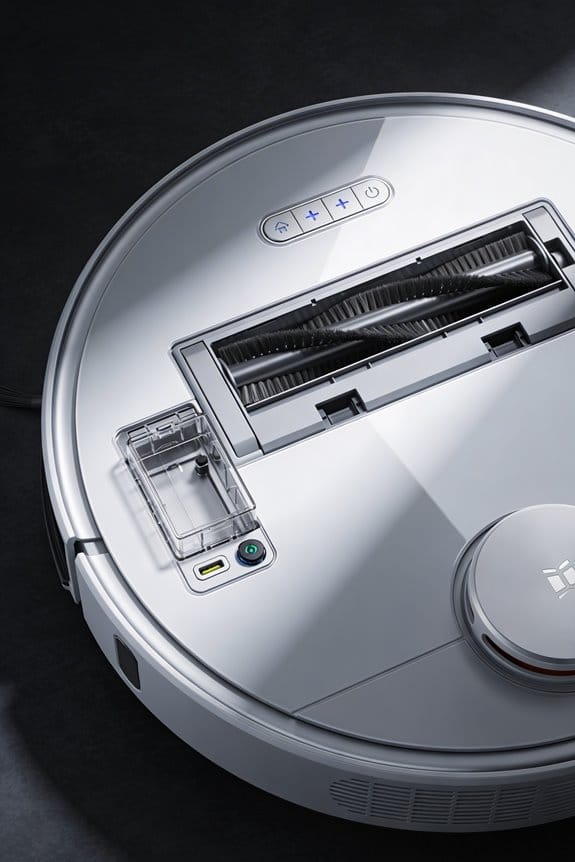
The vacuum’s brain processes what the sensors find super fast, usually in about 200 milliseconds. When it detects more dirt than normal, it automatically kicks up the suction power and changes how it cleans that spot. As dust builds up during cleaning, the system recalibrates itself so it doesn’t lose accuracy over time.
Take the Dirt Detect™ system. It spots a zone that’s dirtier than it should be, then runs cleaning cycles over and over in that exact area until things look clean again. At the same time, the dust sensors adjust the fan speed based on how much pollution they’re picking up—basically turning things up when it’s needed and backing off when it’s not. Why does this matter? Because it means your vacuum uses energy smarter without cutting corners on how clean your floors actually get.
The real benefit here is simple: you don’t have to think about it. Once you turn it on, the vacuum handles different floor conditions on its own and delivers consistent results without you having to jump in and manually adjust anything.
Why Spot Cleaning Saves Time and Energy

Why Spot Cleaning Saves Time and Energy
Honestly, most of us are vacuuming way more than we need to. We push the vacuum across every inch of the floor, even the spots that barely need it, and then wonder why our battery‘s dead or we’re exhausted. But what if you only cleaned the areas that actually needed attention?
That’s where spot cleaning comes in. Instead of making pass after pass over your whole floor, you’re directing all that suction and brush power straight to the dirty zones. You cut down on unnecessary passes by up to 40 percent—which means less work for you and less wear on your machine.
The time savings are real. Your cleaning cycles wrap up faster, and your battery lasts longer between charges. Think about it: why would you want to spend 30 minutes vacuuming when you could get the job done in 20?
Here’s the trick—when you focus on specific areas, your motor doesn’t have to work as hard, and your fan doesn’t need to run at full blast the whole time. Research shows that smart, targeted cleaning can cut your navigation time by 15 percent and drop energy use by 10 percent compared to traditional full-coverage vacuuming. That adds up.
The practical benefits stack up quickly:
- Extended time between charges (fewer trips to the charger)
- Lower electricity bills (less motor runtime)
- Faster room completion (more time for other stuff)
- Less battery strain on your equipment
Dirt Detection Technology Across Industries

Dirt Detection Technology Across Industries
Ever wonder why your robot vacuum seems to know exactly where the mess is? That same smart sensor technology isn’t just sitting in your living room anymore—it’s spreading across industries in ways that actually matter for how professionals clean and maintain spaces.
Building maintenance teams are using dirt sensors now that watch floor conditions 24/7 and adjust cleaning power on the fly. Instead of running the same cleaning routine everywhere, they can focus where it’s actually needed. It’s a more efficient approach that cuts energy waste and saves money—roughly 10% in operational costs just by being smarter about when and where to clean.
Farmers are using similar tech too. Soil sensors measure moisture and nutrient levels with real precision, helping them make better decisions about when and how to treat their land. It’s the same basic idea: measure, detect, respond.
Commercial cleaning robots are getting seriously accurate. Using SSD MobileNet detection systems, they’re spotting stains and debris with 90% accuracy. Response times stay under 200 milliseconds—that’s faster than you can blink. Why does speed matter here? Quick detection means faster action, which means cleaner spaces and less disruption to your workday.
The efficiency gains add up fast:
- Navigation time drops by 15% thanks to smarter algorithms
- Labor costs fall as robots handle more work independently
- Energy use decreases through targeted cleaning instead of full-facility cycles
The best part is selective cleaning. Your facility doesn’t waste time and resources cleaning everywhere. Instead, the system targets contaminated zones specifically, preventing unnecessary full cycles. This means less wear on equipment, lower utility bills, and staff can focus on work that actually needs human attention.
Frequently Asked Questions
Can Dirt Detection Sensors Work Effectively on Dark-Colored Carpets and Floors?
I’ll tackle your question directly: Yes, they work, though challenges exist. While light-colored surfaces reveal dirt easily, I’ve found that dark floor performance requires enhanced sensor sensitivity adjustments. Optical sensors particularly benefit from recalibrated detection thresholds to overcome contrast limitations on darker carpets.
How Often Do Dirt Sensors Require Recalibration to Maintain Detection Accuracy?
I’d recommend recalibrating your robot’s dirt sensors every 3-6 months to maintain detection precision. Dynamic calibration prevents accuracy loss from dust accumulation, so regular recalibration frequency guarantees peak performance and keeps your cleaning results consistently reliable.
Are Dirt Detection Sensors Compatible With All Robot Vacuum Brands and Models?
I’ll be straight with you—dirt detection sensors aren’t universal keys fitting every lock. Different brands engineer proprietary systems, so sensor compatibility varies widely. You’ll find vacuum performance differs dramatically depending on whether your robot’s sensors match its design specifications perfectly.
What Is the Average Lifespan of Optical and Acoustic Sensors in Robotic Cleaners?
I’d say optical and acoustic sensors typically last 3-5 years with proper maintenance. You’ll want to clean them regularly—I recommend monthly checks—to prevent dust buildup that shortens sensor longevity. Consistent maintenance frequency directly extends their operational lifespan notably.
Do Dirt Sensors Increase the Overall Cost and Maintenance Expenses Significantly?
I’d say dirt sensors add 15-20% upfront costs, but they’re worth it. You’ll find a cost benefit analysis shows maintenance efficiency improves greatly—they reduce unnecessary cleaning cycles and extend component lifespan, ultimately saving you money long-term.


