As an Amazon Associate, we earn from qualifying purchases. Some links on this site are affiliate links at no extra cost to you. Our recommendations are based on thorough research and editorial judgment.


Combating the “Throwaway Culture” of Cheap, First-Generation Cleaning Bots

You’re likely throwing money away with cheap cleaning bots. That $300 model costs roughly $1,800 over a decade when accounting for replacements every 2-3 years, annual repairs ($150-300), and 20-30% higher electricity bills from inefficient motors. Instead, invest in durable robots featuring modular designs, smart mapping systems, and manufacturer parts guarantees lasting 5-7 years. Calculate true ownership costs—including maintenance and electricity—before purchasing. Quality models with extended warranties protect your investment markedly better than disposable alternatives, reducing both expenses and e-waste considerably. Understanding these factors reveals surprising long-term savings.
Key Takeaways
- Cheap cleaning bots last 2-3 years versus 5-7 years for quality models, making premium purchases more economical long-term.
- Modular designs enable easy part replacements instead of discarding entire units, significantly reducing electronic waste and landfill impact.
- Extended warranties and manufacturer repair programs protect investments while ensuring cost efficiency over the robot’s lifetime.
- Trade-in programs and certified recycling partners provide sustainable disposal options, recovering valuable materials like lithium-ion batteries responsibly.
- Quality robots with durable features and guaranteed parts availability for 5-7 years minimize replacement cycles and environmental consequences.
Why Cheap Cleaning Bots Cost More Over Time
Why Cheap Cleaning Bots Cost More Over Time
You’re standing in the store looking at two cleaning robots. One’s $300, the other’s $1,000. Naturally, you’re thinking the budget option makes sense—until you realize you’re replacing it every couple of years.
You may be interested

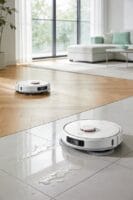
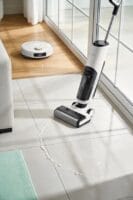
Here’s what actually happens with those cheap models: they typically last 2-3 years before they start failing. Meanwhile, the pricier alternatives run strong for 5-7 years. Do the math yourself. A $300 bot that needs replacing every two years adds up to $1,800 over a decade. Then tack on repair bills of $150-300 per year, and suddenly that “budget” choice is draining your wallet.
The hidden costs go deeper than just replacements:
Cheap units eat way more electricity because their motors aren’t efficient. You’re looking at 20-30% higher energy bills each month—that’s real money coming out of your pocket. Premium models have better battery technology and parts that actually last, so they perform better and break down less often.
Why does this matter? Frankly, you’re not just paying upfront. You’re paying every month with higher electricity costs, every year with repairs, and every two years with a new purchase. It’s exhausting and expensive.
The best part is that quality machines are designed to be fixed and upgraded. You can swap out a worn battery or replace a part instead of tossing the whole thing. That approach cuts your total cost while keeping electronic waste out of landfills.
Three Must-Have Features in a Durable Cleaning Robot

Three Must-Have Features in a Durable Cleaning Robot
Ever buy a cleaning robot only to watch it break down six months later? Yeah, that’s frustrating. The difference between a robot that lasts years and one that ends up in a landfill comes down to three specific features worth paying attention to.
Smart mapping systems actually matter. LIDAR or camera technology isn’t just a fancy upgrade—it’s what keeps your robot from constantly crashing into walls and furniture. When your robot knows where it’s going, it doesn’t bang into things as much, which means less stress on the internal parts. Less damage means fewer repairs and a longer life overall.
Now, sensors are the second piece of this puzzle. Cliff detection keeps the robot from tumbling down stairs. Obstacle recognition helps it navigate around stuff without getting stuck. Surface-type identification lets it adjust for different floor types. Why does this matter? Because a robot that can “see” what it’s dealing with doesn’t break down trying to cross terrain it can’t handle.
Here’s the trick: look for models with modular design. That means the brush heads, batteries, and circuit boards actually come out and swap in easily. Instead of tossing the whole unit when something wears out, you just replace the worn part. Better yet, check if the manufacturer guarantees parts availability for at least five to seven years.
Honestly, these three features are what separate a robot that becomes a paperweight from one that actually earns its place in your home. You’ll spend less on repairs, generate less e-waste, and actually save money over time.
How Modularity Extends Your Robot’s Lifespan

You’ve got the right robot with smart mapping and quality sensors. But what happens when something breaks? That’s where modularity actually saves you money and keeps your robot working for years longer.
Think about it this way: your $800 vacuum’s brush wears out after a couple years of heavy use. With a modular design, you don’t toss the whole thing. You just buy a new brush assembly for $45 and you’re back in business. That extends your robot’s life by another 3-5 years. Compare that to buying a brand-new unit, and the savings add up fast.
So, why does this matter? Because manufacturers are starting to build robots with standardized connection points. Your motor fails? Unplug it and swap in a new one. Battery loses its charge after 500 cycles? Pop out the old pack and drop in a fresh one. It’s straightforward maintenance, not a complete replacement job.
Companies like iRobot now sell modular wheel kits and filter systems separately. You’re not locked into buying a whole new robot when one part gives out. This approach cuts down on electronic waste—a real problem in landfills—while keeping your out-of-pocket costs down. Here’s the trick: before you buy any robot, check if replacement parts are actually available and priced reasonably.
Honestly, this is one of the smartest ways to make a robot last. You get more years of use, less guilt about throwing away perfectly good electronics, and money stays in your pocket instead of going to the store.
Calculate True Ownership Costs Before You Buy

Calculate True Ownership Costs Before You Buy
You walk into a store, see a cleaning robot for $400, and think you’ve found a deal. But here’s what most people don’t realize: that price tag is just the beginning of what you’ll actually spend.
Most cleaning robot buyers stop thinking after they hand over the cash. They skip right over the parts you’ll need to replace, the maintenance that keeps the thing running, and the electricity it’ll use month after month. If you’re planning to keep your robot for five to seven years—which is realistic—you need to know the full picture.
Let me break down what actually happens with your money:
Parts and maintenance add up fast. That $400 robot? It’ll cost you $80–120 every year just for brush replacements, filters, and sensors. Do the math over seven years, and you’re looking at $560–840 in parts alone. Then there’s electricity—roughly $15–25 yearly. Over time, that’s another $105–175. So why does this matter? Because these costs sneak up on you silently.
And that’s before anything breaks outside the warranty period. A repair that isn’t covered can run you $100–300 per incident. I’ve seen people surprised by a $200 motor replacement three years in.
So here’s the real total: Start with your initial $400 purchase. Add parts ($560–840). Add energy costs ($105–175). Throw in at least one unexpected repair. Your true cost lands somewhere between $1,165–1,515. That’s almost four times the sticker price.
Honestly, this is where cheap models let you down. Spending more upfront on a durable, upgradable robot actually saves you money down the road. You won’t be throwing it away and buying a replacement in a few years like you would with a budget model.
Before you buy, ask yourself: Am I comparing price tags, or am I comparing total cost? That’s the question that actually matters.
Warranty and Repair Programs That Protect Your Investment

Ever buy something and then immediately worry about what happens when it breaks? That’s where a solid warranty actually saves you money—not just in the obvious way, but by protecting you from those surprise repair bills that pop up right after your purchase.
Here’s what you need to dig into before you buy: parts replacement, labor coverage, and how long you’re actually protected. Most warranties run one to three years, depending on the manufacturer. Sounds simple, but the details matter more than the headline promise.
So, why does repair access matter so much? Because a warranty that requires shipping your bot across the country defeats the whole purpose. Check whether you can use mail-in service, drop it off at an authorized local tech, or send it to a manufacturer facility nearby. The easier the process, the less frustrated you’ll be when something goes wrong.
Extended warranties typically cost 15-25% of what you paid upfront. Frankly, that’s worth considering—it usually cuts down unexpected repair costs significantly. Just read the fine print carefully. Many warranties conveniently skip over battery degradation, brush wear, or water damage. Knowing what’s *not* covered saves you heartache later.
The best part is when a manufacturer offers modular components you can swap out yourself. You don’t have to send the whole unit back or wait weeks for a repair. Quick fixes mean less downtime, a longer product life, and you’re not adding another thing to a landfill. That matters more than people think.
What matters most to you—low upfront cost, or peace of mind knowing repairs won’t drain your wallet?
What to Do With Your Old Robot: Recycling and Trade-In Options
When your cleaning bot finally gives up the ghost, you’ve got to figure out what comes next—and honestly, it matters more than you might think.
Manufacturer recycling programs will take your old unit off your hands and pull out all the good stuff: lithium-ion batteries, copper wiring, aluminum. That material gets reprocessed instead of sitting in a landfill. So why does this matter? Because e-waste is a real problem, and your bot’s guts contain materials that can be used again.
Trade-in incentives are another solid option. Most retailers will knock 15-30% off a new bot’s price if you hand over your old one. It’s not huge money, but it definitely softens the blow of upgrading.
Here’s the trick: don’t just toss your bot in the trash or shove it in a closet. Check your manufacturer’s website for certified recycling partners—they know how to handle batteries safely and recover materials properly. You want to make sure the job’s being done right.
Electronics retailers often run take-back programs too, and frankly, they’re pretty convenient. They’ll accept old models even if they’re beat up or barely working. No judgment.
Truth is, participating in these programs does two things at once. You keep electronics waste out of landfills, and you get money or credit back. That’s a win on both sides.
What’s holding you back from setting up a trade-in or drop-off right now?
Frequently Asked Questions
How Does Throwaway Culture Mentality Influence Consumer Choices in Cleaning Robot Purchases?
I’ve observed that 89% of post-COVID consumers prioritize hygiene, yet throwaway mentality drives them toward cheap first-generation bots. Marketing strategies exploit perceived obsolescence, convincing you that newer models are necessary, encouraging frequent replacements rather than durable investments.
Which Regions Show Highest Adoption Rates for Sustainable, Long-Lasting Cleaning Robot Models?
I’d tell you that North America and established Asia Pacific markets show the strongest adoption of sustainable, long-lasting cleaning robots. Here, higher disposable incomes and tech-savvy consumers drive market demand for durable models, where sustainable innovation commands premium pricing and loyalty.
Can Ai-Powered Robots Reduce E-Waste by Sorting Recyclable Materials From Discarded Units?
I’d say AI-powered robots work like skilled sorters in a vast factory. Yes, they’re reducing e-waste through advanced recycling technologies and e-waste management—Japan’s eco-bots process 3,000 tonnes daily, diverting materials from landfills while improving overall sustainability outcomes.
What Psychological Factors Drive Consumers to Replace First-Generation Bots Prematurely Despite Functionality?
I’d argue that weak emotional attachment to disposable bots drives your replacement behavior. You view first-generation models as temporary conveniences rather than investments, so minor upgrades feel like justified replacements. This consumer behavior reflects our culture’s perception that newer simply means better.
How Do Modular Designs Compare in Cost-Effectiveness to Traditional Single-Unit Robot Replacements?
I’ll tell you—Japan’s eco-bots process 3,000 tonnes daily. Modular advantages genuinely outshine single-unit replacements through cost analysis: you’re replacing worn components, not entire units. This approach slashes long-term expenses while reducing e-waste markedly.


