As an Amazon Associate, we earn from qualifying purchases. Some links on this site are affiliate links at no extra cost to you. Our recommendations are based on thorough research and editorial judgment.


Cordless Robotic Pool Cleaners: The Shift to Battery-Powered Submersibles

Cordless robotic pool cleaners represent a convenience shift, powered by lithium-ion batteries delivering 40,000-60,000 pascals of suction force. You’ll invest $2,000-$3,500 upfront versus $800-$1,500 for corded models, though five-year costs favor corded options at $900-$2,000 total. Premium cordless units maintain 85-90% cleaning power with low batteries, feature AI mapping for efficient 50-meter coverage, and enable smart scheduling. Battery replacements every 2-3 years cost $400-$600. Understanding your pool size, budget constraints, and long-term financial implications reveals whether cordless technology suits your specific situation.
Key Takeaways
- Cordless robotic cleaners use lithium-ion batteries, eliminating cord constraints while offering flexibility for pools under 15,000 gallons.
- Modern cordless models deliver 40,000-60,000 pascals of suction with AI mapping, completing full-pool cleaning in 90-150 minutes.
- Premium cordless cleaners retain 85-90% cleaning power at low battery with smart home integration for remote scheduling.
- Battery replacements every 2-3 years cost $400-$600, while 5-year cordless ownership totals $3,200-$4,700 versus $900-$2,000 for corded.
- AI-driven navigation with 3D mapping reduces overlapping coverage by approximately 40%, improving overall cleaning efficiency and battery optimization.
Cordless vs. Corded Pool Cleaners: Which Should You Buy?
Cordless vs. Corded Pool Cleaners: Which Should You Buy?
Tired of dealing with messy cords every time you want to clean your pool? The choice between cordless and corded robotic cleaners isn’t as straightforward as it sounds—it really comes down to what matters most to you.
You may be interested

Cordless models are genuinely convenient. They run on lithium-ion batteries, so you skip the whole tangled-cord mess and get your cleaner going in seconds. You don’t have to worry about tripping hazards or dragging cables around your deck. The downside? They cost more upfront, and batteries eventually lose their charge capacity over time.
Corded cleaners, on the other hand, just keep going. No battery anxiety. No wondering if you’ve got enough juice to finish the job. They’re also way cheaper to buy, which matters if you’re on a budget. The trade-off is dealing with that cord—it’s annoying, and honestly, it does limit where your cleaner can roam without you managing a cable.
So, why does this matter? Because picking the wrong one means either wasting money or spending months frustrated with your purchase.
Here’s what to ask yourself:
- Pool size: Bigger pools? A corded cleaner’s endless power helps. Smaller pools? Cordless works fine.
- How often you clean: Weekly cleaning is easier with cordless convenience. Heavy use favors corded reliability.
- Your budget: Can you swing the higher price tag now for less hassle later?
Truth is, more people are going cordless these days, especially if they don’t have massive pools. But that doesn’t mean it’s right for you.
What’s your biggest pain point with pool maintenance right now—the setup hassle or the cost?
Why Homeowners Are Switching to Cordless
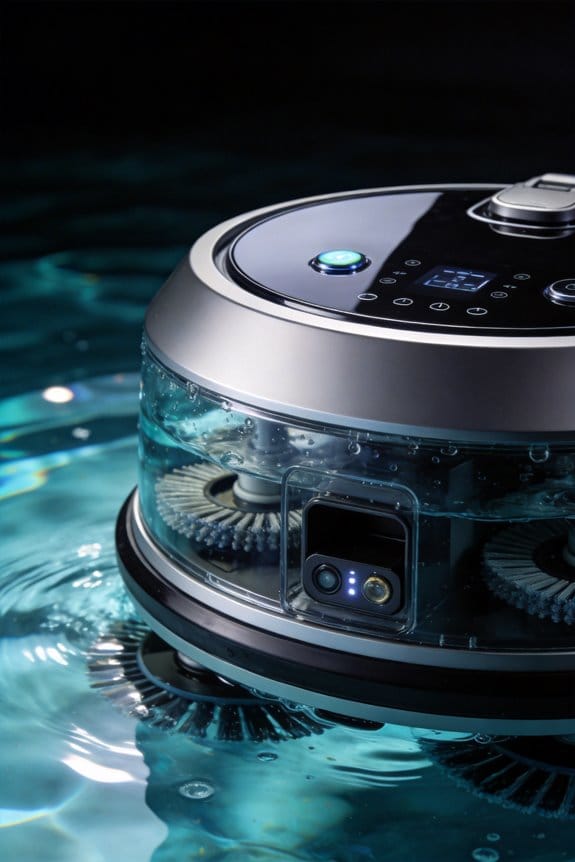
Tired of dealing with tangled cords every time you want to clean your pool? You’re not alone. More homeowners are ditching corded cleaners for cordless models, and honestly, it makes sense once you understand what’s changed.
Battery technology has gotten seriously better over the last few years. The lithium-ion batteries in today’s cordless cleaners can run for extended periods without the performance drops you’d see in older models. That means you’re not sacrificing cleaning power just because you ditched the cord.
So, why does this matter? Because the setup and cleanup with a corded model is annoying. You’re dealing with power outlet constraints, dragging cables around your pool deck, and storing a mess of tangled cord. With a cordless unit, you just grab it, turn it on, and let it work—no fussing with outlets or cables wrapping around your feet.
The convenience doesn’t stop there. Modern cordless cleaners come with smart home integration, so you can schedule cleanups and check on performance from your phone. Try this: set it to run while you’re at work, and your pool’s ready by the time you get home.
Maintenance becomes way simpler too. You’re saving significant time on setup and takedown each week, which adds up faster than you’d think.
The numbers back this up. Residential buyers now account for over 76% of the market share for cordless models. That’s not a coincidence—it’s people voting with their wallets for portability and ease.
Bottom line: if you’re looking for a pool cleaner that works around your schedule rather than against it, cordless is worth the switch. What’s been holding you back from making the change?
How Lithium-Ion Batteries Power Cordless Performance

Want to know what actually separates a cordless pool cleaner that lasts from one that dies on you halfway through the season? It comes down to three things: how much energy the battery holds, how fast it can deliver power, and how many times you can charge it before it gives up.
Lithium-ion batteries beat the older nickel-metal hydride stuff by a mile when it comes to energy density. You’re getting roughly 150-250 watt-hours per kilogram, which means you can actually clean your pool for 90-120 minutes without stopping to charge. That’s a real difference when you’ve got a big pool.
Here’s the trick: modern cordless cleaners don’t just run longer—they run *better* as the battery drains. Most premium models hold onto 85-90% of their cleaning power even when the battery’s mostly empty. So, why does this matter? Because you’re not stuck with weak suction at the end, which is honestly annoying when you’re finishing up.
Think about durability too. A quality lithium-ion battery handles 500-1000 complete charge cycles before you’ll notice any real drop in how long it lasts. That means years of pool maintenance without constantly replacing batteries.
The bottom line: you’re getting consistent performance, longer sessions between charges, and a battery that actually sticks around. So when you’re shopping for a cordless cleaner, don’t just look at the price tag—check what the battery can actually do for you.
Cordless Performance: Suction, Coverage, and Speed Compared

Cordless Performance: Suction, Coverage, and Speed Compared
So you’ve dropped cash on a solid lithium-ion battery. Now the real question is: what’s it actually doing for your pool? That’s where motor strength and suction force come in—measured in pascals. Honestly, this matters more than you’d think. Most modern robotic cleaners pull between 40,000 and 60,000 pascals, which is strong enough to grab everything from leaves to fine debris across different pool depths and surfaces.
Coverage area is another thing you can’t ignore. Premium cordless models can navigate up to 50 meters around your pool’s perimeter, using AI mapping and smart path planning to make sure nothing gets missed. Why does this matter? Because a cleaner that covers your whole pool in one run saves you time and battery life.
Speed varies depending on the model, but expect full-pool cleaning to take somewhere between 90 and 150 minutes. Pool size and how much junk is floating around both affect this timeline. Try timing your first few runs so you know what to expect with your specific setup.
Frankly, the best part about cordless systems is they deliver the same cleaning power as corded models without the hassle. No tangled cords wrapping around obstacles, no fumbling with connection points before each session. You just charge and go.
Ready to cut the cord? What’s holding you back—the upfront cost, or concerns about battery life?
The Real Cost of Cordless vs. Corded Over 5 Years

The Real Cost of Cordless vs. Corded Over 5 Years
So you’re standing in the pool supply aisle trying to figure out which cleaner won’t drain your wallet over the next five years. The choice between cordless and corded isn’t just about what feels good in your hand right now—it’s about what you’ll actually pay when it’s all said and done.
Let’s talk numbers. Cordless models run you $2,000–$3,500 upfront, while corded units cost between $800–$1,500. That’s a big difference right out of the gate. But here’s where most people get tripped up: the sticker price isn’t the whole story.
With cordless cleaners, you’re looking at battery replacements every 2–3 years. That’s another $400–$600 you didn’t budget for. Corded models skip that expense entirely, though you’ll be paying for electricity over time.
Do the five-year math and it shifts things into focus. Cordless ends up closer to $3,200–$4,700 when you factor in battery swaps. Corded stays lean at $900–$2,000 even after accounting for power usage. So why does this matter? Because what you save now might become what you spend later—or vice versa.
Cordless gives you freedom. No cord dragging behind you, no hunting for an outlet, and honestly, the convenience is hard to beat. Corded keeps things simple and cheap if you don’t mind being tethered to a power source.
Truth is, the right pick depends on what matters more to you: paying less overall or gaining flexibility and ease of use. What’s your pool maintenance style—speed and convenience, or keeping costs as low as possible?
Smart Control and Remote Monitoring: What You Actually Get
Smart Control and Remote Monitoring: What You Actually Get
Ever wondered if your pool cleaner really needs to be smarter than you? Here’s the honest truth: remote monitoring sounds amazing until you’re standing in your yard with no Wi-Fi signal.
Let’s break down what smart features actually do for you. Your phone gets notifications when cleaning cycles finish, battery drops, or something breaks down. You can schedule cleanings from bed or work without lifting a finger. The app learns your pool habits over time and adjusts the schedule automatically. Sounds great, right?
The catch? It all depends on solid Wi-Fi coverage near your pool. If you’ve got a bigger property or your router’s nowhere near the water, you’re stuck. This is where a lot of people get frustrated—they buy the fancy model expecting full remote control, then find out their connection drops every time the cleaner swims across the deep end.
Budget models versus the premium stuff:
Budget-friendly cleaners? They skip the smart features entirely. You get a basic machine that does its job, nothing more. Premium cordless models at higher price points actually connect with your smart home system—think Amazon Alexa or Google Home. That ecosystem integration is genuinely useful if you’re already living that connected home lifestyle.
Honestly, ask yourself this: do you actually need to monitor your pool cleaner from your phone, or would you rather just know it works when you need it? For most people, basic remote monitoring (checking battery and scheduling) beats the fancy stuff. The real value isn’t in watching your cleaner work—it’s in getting alerts before problems become expensive repairs.
AI Navigation and Adaptive Pool Mapping Explained
Beyond the basics like scheduling and battery alerts, the premium cordless cleaners worth your money use AI-driven navigation systems that actually change the game for pool cleaning efficiency. These models map out your pool in 3D, creating a detailed layout that the cleaner uses to adjust its path on the fly based on water conditions, how much debris is floating around, and the shape of your pool walls and floor.
So, why does this matter? Because smarter navigation means the cleaner doesn’t waste energy going over the same spots repeatedly. You’re looking at about 40% less overlapping coverage, which sounds technical but really just means faster, cleaner results and a battery that lasts longer per cycle.
What’s genuinely useful is how these systems learn your pool over time. After a few cleaning runs, the device figures out which corners give you trouble and where debris tends to pile up. It’ll boost suction intensity in those problem areas automatically while dialing it back elsewhere—no manual tweaking required.
Frankly, this transforms the whole cleaning experience. Instead of your cleaner bouncing around randomly, it follows a systematic path that covers everything methodically. You get better coverage, smarter energy use, and less strain on the battery. The device works harder on what matters and takes it easy where it doesn’t need to.
If you’re tired of wondering whether your pool’s actually clean or just hoping for the best, this kind of intelligence takes the guesswork out of it. What would it mean for your routine if your cleaner could actually think?
When to Buy Cordless (And When to Stick With Corded)
When to Buy Cordless (And When to Stick With Corded)
Tired of wrestling with cables every time you want to clean your pool? The cordless vs. corded debate isn’t really about which one’s “better”—it’s about what actually works for *your* situation.
Let’s break this down. Cordless pool cleaners give you freedom. No tangled hoses, no tripping hazards, and you can move them around without thinking twice. They’re lighter to handle and honestly, they just feel more modern. The catch? You’ve got to stay on top of battery charging, and they’ll cost you more upfront.
Corded models are the workhorses. They plug in and run all day without needing a break. If you’ve got a big pool or you’re the type who doesn’t want to fuss with batteries, these are solid. Plus, they’re cheaper to buy initially.
So, why does this matter? Your pool size tells the story.
Small pools (under 15,000 gallons)? Cordless makes sense. You’ll appreciate the ease of setup and how quickly you can get the job done without dragging cables around.
Larger pools? Corded cleaners earn their keep. They won’t quit on you halfway through a cleaning cycle, and you won’t be stressing about battery life on a hot summer day.
Truth is, money matters too. If your budget’s tight, corded units are the way to go—they’re friendlier to your wallet right now. But if convenience ranks high on your list and you don’t mind spending extra, cordless technology has gotten really good.
What matters most to you: saving money upfront, or saving yourself the hassle later?
Top Cordless Cleaners for Different Pool Sizes and Budgets
Picking the right cordless pool cleaner can feel overwhelming when you’re staring at dozens of options online. The key is matching what you actually need—based on your pool size and what you’re willing to spend—rather than just grabbing whatever has the best reviews.
Your pool’s size matters way more than you’d think. If you’ve got a smaller pool under 30,000 gallons, you don’t need some massive unit taking up half your storage shed. Compact models work just fine and cost less. Now, if your pool’s closer to 40,000 gallons, you’re looking at cleaners that can run longer without needing a recharge.
So, why does battery capacity get so much attention? Because it directly determines how long your cleaner can actually work before you need to plug it back in. A stronger battery means better coverage and less downtime between charges.
Here’s what you’ll actually spend:
- Entry-level cleaners: around $800
- Mid-range options: $1,200 to $2,000
- High-end models: $3,500 and up
Truth is, most homeowners land somewhere in that middle range. You get solid performance without breaking the bank, and that’s where 76% of the residential market shops anyway.
Before you pull the trigger on a purchase, take a real look at your pool’s specific situation. Think about what kind of debris you deal with most—leaves, dirt, algae—and how often you’re actually cleaning. Are you doing weekly maintenance or just spot cleaning when needed? Your answers here should guide your budget and feature choices.
What does your typical pool maintenance routine look like right now? That honest answer will help you figure out which cleaner actually makes sense for you.
What’s Coming Next in Cordless Technology
Once you’ve matched your cleaner to your pool’s actual demands, the next step is paying attention to what’s actually changing in cordless technology—because what’s available today will shape what you can buy in a year or two.
Wireless charging stations are making life easier. You’re no longer fumbling with manual connectors, and your battery ports aren’t taking a beating from constant plugging and unplugging. That alone cuts down on repairs down the road.
The batteries themselves have gotten seriously better. Premium lithium-ion models now hold onto 90% of their capacity even after 500+ charge cycles. Translation? Your cleaner stays strong for years, not months. So why does this matter? Because fewer battery replacements mean you’re not dropping hundreds of dollars on replacements every couple of seasons.
The smart mapping is where things get interesting. These newer systems use AI to map your pool’s actual shape and adjust their path on the fly. Honestly, the coverage efficiency jumps 25-35% compared to older models—that’s not a small improvement. Your cleaner covers more ground in less time, which means less sitting around waiting for it to finish.
Here’s the trick: multi-motor setups with intelligent scheduling now let cordless units perform just as well as their corded cousins, minus the cable dragging you around the yard. You get full freedom without sacrificing power or runtime.
Bottom line—these improvements stack up to real savings on maintenance and replacements over time. Are you still thinking about what matters most to you: runtime, coverage, or lower long-term costs?
Frequently Asked Questions
How Often Should I Replace the Lithium-Ion Battery in My Cordless Pool Cleaner?
I’d replace your lithium-ion battery every 3-5 years, though it depends on usage. While some batteries last longer, others degrade faster—regular maintenance tips like proper charging and storage extend battery lifespan considerably, keeping your cleaner running efficiently.
Can Cordless Pool Cleaners Handle Saltwater Pools Without Damage?
I’d recommend checking your cleaner’s saltwater compatibility first. Most cordless models lack sufficient corrosion resistance for saltwater pools, as salt degrades batteries and electronics quickly. You’ll want a specialist saltwater-rated unit to avoid costly damage.
What’s the Environmental Impact of Disposing Old Cordless Cleaner Batteries?
I’d say improper disposal harms ecosystems through toxic leaching, but battery recycling programs greatly minimize this. I encourage you to explore environmental alternatives like manufacturer take-back schemes and certified e-waste facilities to responsibly handle your old lithium-ion batteries.
Do Cordless Cleaners Work Effectively in Above-Ground Pools?
Haven’t you wondered if cordless cleaners suit smaller pools? I’d say they’re effective in above-ground pools when you match the model to your pool’s size. Their effectiveness comparison shows cordless units handle above ground features well, though you’ll want adequate battery capacity for peak results.
How Does Weather Affect Cordless Pool Cleaner Battery Performance?
I’ll tell you that weather conditions noticeably impact your cordless cleaner’s battery efficiency. Cold temperatures reduce lithium-ion performance, while heat can accelerate battery degradation. I’d recommend storing and operating your unit in moderate conditions for ideal runtime.


