As an Amazon Associate, we earn from qualifying purchases. Some links on this site are affiliate links at no extra cost to you. Our recommendations are based on thorough research and editorial judgment.


How Modern Floor Plans Are Being Designed With Robot Vacuums in Mind

Modern floor plans now prioritize robot vacuum compatibility through strategic design choices. You’ll benefit from open layouts that minimize navigation obstacles, furniture with 4-6 inches of clearance, and pathways measuring 18-24 inches wide. Designers consider threshold heights under 0.75 inches and position docking stations centrally, within 15 feet of main areas on hard floors. Modular furniture arrangements adapt as cleaning technology evolves, ensuring efficient 360-degree scanning and reducing battery strain considerably. Explore further to discover specific implementation strategies.
Key Takeaways
- Open floor plans with minimal walls enable robot vacuums to navigate efficiently using smart mapping and landmark detection technology.
- Furniture requires 4-6 inches of clearance underneath to allow vacuum access, with pathways designed 18-24 inches wide for optimal movement.
- Low thresholds under 0.75 inches and beveled edges facilitate seamless robot navigation between rooms and different flooring surfaces.
- Central docking stations placed on hard floors within 15 feet of main living areas maximize charging efficiency and battery performance.
- Modular, flexible layouts with strategic furniture placement and open spaces accommodate robot movement while adapting to evolving cleaning technology.
Open Floor Plans and Robot Vacuum Navigation
Open Floor Plans and Robot Vacuum Navigation
Ever watched your robot vacuum go in circles in your living room, cleaning the same spot twice? Open floor plans look great for entertaining, but they’re actually a nightmare for robot vacuums to figure out. Without walls to guide them, these machines can get confused about where they’ve already been and waste a ton of battery power going over the same areas.
You may be interested
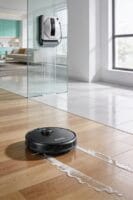
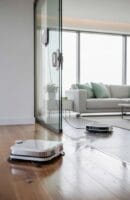
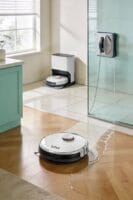
The good news is that modern vacuums use smart mapping to solve this problem. Most of today’s models store 4-5 floor plans in cloud storage using something called automatic landmark detection. Basically, the vacuum learns where your furniture is and uses that information to stay oriented.
So why does this matter? Here’s the thing: a well-mapped space means your vacuum actually cleans your home instead of just running around randomly. The best part is that many newer models generate 3D multi-floor maps in just a few minutes. Once the map is created, the vacuum remembers your room layouts, traffic patterns, and where you’ve placed furniture. That means it can plan smarter cleaning routes and cut down on overlapping coverage by up to 40 percent.
The technology behind this is pretty solid. Most quality vacuums now use two types of sensors working together:
- LiDAR (light-based sensors that map distance)
- Cameras (visual recognition for real-time floor detection)
Together, these sensors let your vacuum automatically switch between cleaning modes depending on whether you have hardwood, tile, or a mix of surfaces. Honestly, it’s a feature that actually makes a difference in how clean your floors get.
The smarter part? Machine learning keeps improving your vacuum’s routes after each cleaning run. It learns what worked and what didn’t, getting better at efficiency over time.
If you’ve got an open floor plan at home, a vacuum with solid mapping technology is worth the investment. Does your current vacuum struggle with your layout?
Furniture Placement: Clearance, Leg Design, and Traffic Patterns

Furniture Placement: Clearance, Leg Design, and Traffic Patterns
Can your vacuum actually fit under your couch, or are you just hoping for the best? That gap between your sofa legs and the floor is prime real estate for dust and pet hair, but it’s useless if your machine can’t reach it. Tight spaces under sofas, beds, and low-profile furniture need vacuums that are genuinely built to squeeze underneath—not ones that just sound good in the marketing materials.
Leg height is where the rubber meets the road. Modern robots come with retractable designs that clear about 89mm (roughly 3.5 inches) underneath, which lines up with what most standard furniture heights demand. I’ve found that the ProLeap™ System’s adjustable legs handle obstacles up to 2.4 inches while staying in solid contact with your floor. But here’s the thing: you’ve got to measure your own furniture. That 89mm clearance might not work for your mid-century couch or that platform bed you’re thinking about buying.
Your home’s traffic patterns matter more than you’d think. High-traffic hallways and living rooms benefit from machines that can map out your space and remember it. Why does this matter? Because a robot that understands your room’s layout can clean smarter—it charts efficient paths through open areas, avoids furniture jams, and cuts down on wasted overlap. AI-powered navigation recognizes how your furniture is arranged and adjusts its route accordingly.
When you’re shopping, take five minutes to actually measure the clearance under your furniture. Compare those real numbers to what the vacuum specs say. Honest advice: aim for at least 4–6 inches of clearance under your major pieces if you want thorough coverage without constant hiccups.
The bottom line is this—a vacuum’s leg design and smart navigation only work if they’re matched to your actual home. Does your furniture have the clearance your new machine needs?
Thresholds and Transitions: Critical Design Details for Robot Movement

You’ve measured your furniture clearance and mapped your room’s layout, but your vacuum still faces a hidden challenge: getting from one surface level to another. Honestly, threshold height is one of those sneaky factors that’ll stop your robot dead in its tracks.
Most models struggle with anything exceeding 0.75 inches. That’s less than the height of a standard coin, yet it’s enough to jam your vacuum or leave it spinning its wheels helplessly between rooms. So, why does this matter? Because you could have the perfect floor plan otherwise, and a half-inch ridge will undo all that planning.
The ProLeap™ System handles obstacles up to 2.4 inches by using retractable legs that lift the unit over uneven floor heights, including double-layer thresholds common in older homes. If you’re dealing with that transition between your living room and kitchen, or from hardwood to tile, this kind of feature makes a real difference.
Here’s the trick: change materials significantly impact navigation success rates. Whether you’re looking at wood trim, metal strips, or beveled edges, they’re not all created equal. Beveled shifts reduce jamming by 40 percent compared to sharp 90-degree angles. That’s a huge difference when your vacuum’s running daily.
When you’re designing your floor plan or deciding on new trim work, think about your robot’s climbing capabilities. Specify gradual slopes and smooth change materials. It sounds minor, but it’s one of the easiest ways to keep your vacuum moving without frustration. Does your home have any troublesome thresholds you’re hoping to solve?
Strategic Docking Station Placement in Home Design

Strategic Docking Station Placement in Home Design
Ever notice how your robot vacuum comes back from cleaning with barely any battery left? That’s usually not a hardware problem—it’s a placement problem.
Your dock’s location matters way more than most people think. If you’ve got it stuck in a corner or tucked away in a closet, your robot spends half its battery just getting there and back. The real trick is putting it somewhere central or near the spots where you actually need cleaning done the most. That way, cleaning cycles start faster and your robot isn’t burning through that 180+ minute battery life just commuting.
Here’s what actually works: place your dock on hard floors instead of carpet. It’s not just about looks—it’s practical. Hard surfaces let the charging connection work smoother and faster, so your robot can get back to work quicker. Plus, you avoid the hassle of the wheels getting tangled up in carpet fibers around the dock itself.
So, why does accessibility matter? Because a jammed dock is basically useless. Make sure nothing blocks the charging contacts or the path in and out. That consistent, friction-free connection keeps your robot charged and ready without guesswork.
Try this: keep your dock within about 15 feet of your main living areas. I’ve found that this distance hits the sweet spot—your robot gets decent coverage without wasting energy on long treks across the whole house. It works especially well if you’ve got multiple floors, since you won’t wear down the battery just moving between zones.
Think about where your robot starts its day, and put the dock there. Your cleaning cycles will be longer, your robot won’t be stressed, and you’ll actually get what you paid for.
Modular Layouts: Designing Spaces That Adapt to Robot Vacuum Technology

Dock placement works best when your home’s layout actually supports how your robot moves around. Honestly, this means rethinking where you put your couch, chairs, and tables. Your robot needs enough space to do its job without getting stuck or spinning in circles.
Here’s what I’ve learned: your robot’s navigation system works on a 360-degree scan, and it needs about 2.4 inches of clearance to get over small obstacles. So tight corners and furniture crammed together? That’s where robots struggle most.
Design your rooms so they’re more open and flexible. Leave pathways that are 18 to 24 inches wide so your robot can move freely from one area to the next. This might mean rearranging things a bit, but it’s worth it.
Where should you put the dock itself? Put it somewhere central in your home, close to a power outlet if you can. This cuts down on how long your robot needs to recharge before it can get back to cleaning. Why does this matter? Because a robot that’s constantly running out of battery wastes your time, and you end up with half-cleaned floors.
Try this: if you’re thinking about getting a robot vacuum, start by sketching out your rooms and marking where furniture will go. Make sure your robot can reach every zone without you having to move stuff around constantly. Open floor plans really do help—they let your robot’s smart mapping features work the way they’re supposed to, adapting to your home as it cleans.
The best part? Once your space is set up right, your robot does its job with barely any help from you. Does your home layout work with robot cleaning, or does it fight against it?
Frequently Asked Questions
Can Robot Vacuums Effectively Clean Homes With Multiple Floor Types Simultaneously?
Yes, I’d say modern robot vacuums excel at multi-surface cleaning through impressive adaptability. They automatically detect floor types—carpets, tiles, hard floors—and adjust suction power and cleaning modes in real-time, ensuring you get excellent results across your entire home simultaneously.
How Do Smart Home Integrations Optimize Robot Vacuum Scheduling Across Daily Routines?
I’ve found that smart home integrations work like a maestro conducting an orchestra—they orchestrate your robot’s schedule seamlessly. I coordinate smart schedules around your routine optimization, automating cleaning when you’re away and pausing before guests arrive, keeping your home perpetually pristine.
What Maintenance Requirements Exist for Multi-Floor Cloud Storage and Landmark Detection Systems?
I’d recommend you regularly update your robot’s firmware to maintain landmark detection accuracy. You’ll also need periodic data management reviews—clearing outdated floor plans and ensuring cloud storage doesn’t become cluttered, which compromises system maintenance efficiency.
Do Robot Vacuums Adapt Cleaning Strategies for Seasonal Furniture Rearrangement Automatically?
I’ll tell you: yes, they do. My vacuum learns your furniture layout and automatically adjusts when you rearrange seasonally. It recognizes changed layouts through landmark detection, updating its cleaning paths without any manual reprogramming needed from you.
Can Privacy-Focused RGB Camera Navigation Function Without Cloud Data Transmission?
Yes, I’ve found that RGB camera steering functions brilliantly like a ship navigating by stars—entirely locally. Your robot processes visual data on-board, addressing privacy concerns by keeping local data locked within the device, never touching cloud servers.


