As an Amazon Associate, we earn from qualifying purchases. Some links on this site are affiliate links at no extra cost to you. Our recommendations are based on thorough research and editorial judgment.


Millimeter-Wave Radar vs. Cameras in Next-Gen Robot Vacuum Navigation

mmWave radar excels in darkness and adverse weather, maintaining consistent navigation without visual light dependency, while cameras struggle in low-light conditions. However, radar’s 1° angular resolution limits obstacle detection of thin items like wires and furniture legs, requiring 14-15 cm spacing between objects. Cameras provide superior mapping and object identification in well-lit spaces. Modern vacuums increasingly combine both sensors, leveraging radar’s weather resilience with cameras’ detailed recognition. Your home’s lighting, clutter level, and budget determine which technology suits you best—explore the specific performance metrics to find your ideal match.
Key Takeaways
- mmWave radar excels in darkness and poor weather, while cameras perform best in well-lit environments with detailed object recognition capabilities.
- mmWave radar detects obstacles cameras miss, like glass doors and wires, but struggles with thin objects and tight spaces.
- Modern vacuums combine both sensors to leverage radar’s all-weather reliability with cameras’ superior mapping and object identification in adequate lighting.
- Radar requires 14-15 cm spacing between objects versus cameras’ higher resolution, making cameras better for cluttered or complex home layouts.
- Budget-conscious buyers may choose radar-only systems, while hybrid solutions justify higher costs through reduced false stops and enhanced navigation precision.
mmWave vs. Cameras: Which Sensor Wins in Real Conditions
mmWave vs. Cameras: Which Sensor Wins in Real Conditions
So you’re standing in a store, looking at two robot vacuums side by side—one with mmWave radar, one with cameras. You’re wondering which one actually works better in your house. That’s the real question, isn’t it?
You may be interested
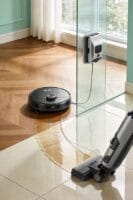
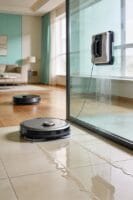
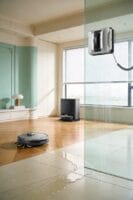
Here’s what I’ve found: mmWave radar and cameras each have their strengths, but they struggle in different ways. Cameras need good lighting to map your home and spot obstacles. Throw your robot into a dark hallway or a rainy day, and that camera-based system gets confused fast. mmWave doesn’t care about lighting or weather—it just keeps working.
Why does this matter? Because a $400+ robot vacuum should work reliably, not just on sunny afternoons.
mmWave shines in conditions where cameras completely fail:
- All-weather performance (rain, fog, dark rooms)
- Detecting obstacles cameras can’t see (glass doors, thin wires)
- Consistent navigation without needing ambient light
Frankly, if you’ve got a dark basement or live somewhere with frequent cloudy days, this is worth paying attention to.
Cameras aren’t useless, though. They’re great for visual mapping in well-lit spaces and tend to be cheaper upfront. The catch? You’re limited by your home’s lighting conditions. That low-light bedroom or the mudroom during a rainy afternoon becomes a navigation headache.
The best part is that some newer robot vacuums combine both sensors. This approach covers the gaps—mmWave handles the tough conditions while cameras help with detailed mapping when light is available.
Before you buy, think honestly about your home. Do you have rooms with poor natural light? Is your robot likely to run during dark hours? Does weather or humidity play a big role in your daily routine? Your answer should point you toward the right choice.
When Darkness and Weather Break Cameras (But Not mmWave)

Ever tried to get your robot vacuum to clean when the sun goes down? That’s when camera-based systems hit a wall that mmWave radar doesn’t.
Cameras need light to work—it’s that simple. When your vacuum relies on visible light to map your home and spot obstacles, darkness basically shuts it down. Your vacuum can’t navigate effectively once the lights turn off because visual SLAM (the fancy tech cameras use) needs enough light to figure out where things are and what to avoid.
Weather is where the real difference shows up. Rain, fog, and dust? They’re brutal on cameras. The visibility drops, maps get fuzzy, and your vacuum starts making mistakes. Meanwhile, mmWave radar is operating at 60–120 GHz and punching straight through all that atmospheric interference like it’s not even there.
Think about what this means practically:
At night: Your camera-equipped vacuum stops working. mmWave keeps detecting everything perfectly fine.
During a storm: Cameras give you sketchy, unreliable data. mmWave is still measuring distances and tracking obstacles with consistent accuracy.
So, why does this matter? Because a vacuum that only works in perfect conditions isn’t really solving your problem. If you’re serious about hands-off cleaning no matter the time of day or weather outside, you need radar. Camera-only systems are fighting an uphill battle when darkness falls or weather gets rough.
The bottom line: Weather-resistant navigation isn’t optional if you want a vacuum that actually works when you need it. Radar integration beats relying on cameras alone.
Performance Head-to-Head: Range, Speed, Angle, and Detection

Performance Head-to-Head: Range, Speed, Angle, and Detection
Trying to pick between mmWave radar and cameras for your robot vacuum? The specs matter way more than what the ads tell you. Both technologies work, but they’re good at different things—and honestly, that’s where the decision gets interesting.
mmWave radar nails velocity and range measurements. It consistently figures out how far away something is and how fast it’s moving without all the complicated math that cameras need to do. That’s a real advantage if you want dependable performance no matter the lighting or weather outside your windows.
But here’s where it gets complicated: mmWave radar only gives you 1° of angular resolution, which means it needs objects to be about 14–15 cm apart to tell them as separate things. So, why does this matter? Thin obstacles like wires or glass edges can slip right through that gap—literally. If your home has exposed cables or you’re worried about the vacuum bumping into glass furniture, that’s something to keep in mind.
Cameras handle detail way better. They’re excellent at actually identifying what’s in front of the vacuum—telling a shoe from a pet toy from a phone charger. The catch? They can’t directly measure how fast something’s moving, and they need decent lighting to work well.
Try this: Think about your space. Do you have lots of exposed wires, thin obstacles, or poor lighting in some rooms? That points toward mmWave. Do you value the vacuum understanding exactly what it’s about to hit? Cameras are your answer.
Honestly, the best choice comes down to your home’s actual layout and lighting, not which sensor sounds cooler.
Where mmWave Falls Short: The Small Obstacle and Resolution Problem

Where mmWave Falls Short: The Small Obstacle and Resolution Problem
Ever wonder why your robot vacuum keeps bumping into things your eyes spot instantly? Frankly, it comes down to how mmWave radar actually sees the world—and it’s got some real blind spots.
Your vacuum’s 1° angular resolution sounds precise until you realize what it can’t do. That narrow beam struggles with thin obstacles—think chair legs, power cords, or glass edges. So, why does this matter? Because these exact hazards are everywhere in your home, and your robot might sail right past them.
Here’s what happens in practice:
- Objects need about 14–15 cm of space between them before your vacuum can tell them apart
- Displacement resolution maxes out around 5 cm at normal distances
- Transparent barriers and low-profile hazards basically disappear from the sensor’s view
The real problem shows up when you’re dealing with cluttered rooms. Thin furniture legs vanish into the detection gap. Delicate cords become invisible. Meanwhile, a simple camera would catch all of this instantly.
Furniture corners and tight spaces are another headache. mmWave just can’t map confined areas as accurately as other sensor types. You’re left with a robot that navigates open floors fine but gets confused in the rooms where you actually need precision.
Honestly, this is why the best robot vacuums combine multiple sensors. mmWave alone won’t cut it if you want truly safe autonomous operation. Pairing it with supplementary sensing tech fills those detection gaps and keeps your floors—and your belongings—actually protected.
What Cameras Do Better: Mapping, Classification, and Detail

What Cameras Do Better: Mapping, Classification, and Detail
Ever wonder why your robot vacuum sometimes mistakes a sock for a wall? That’s where cameras really shine compared to radar alone.
Cameras let your vacuum actually *see* what’s in front of it. You get medium-resolution object recognition that can tell the difference between your couch, your kid’s toys, and a actual hazard. Radar just knows something’s there—cameras know *what* it is. In well-lit rooms, they’re basically the vacuum’s eyes, using visual SLAM technology to build a detailed map of your home for smarter navigation.
The spatial awareness piece is honestly impressive. Cameras pick up fine details like the sharp corner of a table leg or the edge of a doorframe. This means better obstacle avoidance and fewer bumps into your furniture.
Here’s the trick: your app gets way more useful with cameras. You can actually *watch* your vacuum working through a live feed, and you can draw no-go zones based on what you see rather than guessing where they should be. It’s convenient and honestly more accurate.
But—and this is a big one—cameras need light to work. Turn off the lights or let fog roll in, and they struggle. That’s when radar’s consistency becomes pretty valuable. Frankly, this is the real trade-off nobody talks about enough.
The Hybrid Approach: Why Two Sensors Beat One
The Hybrid Approach: Why Two Sensors Beat One
What if your robot vacuum could see in the dark *and* recognize a glass door at the same time? That’s the real-world benefit of pairing mmWave radar with a camera. Instead of relying on one sensor type and hoping it covers your home’s quirks, you’re giving your vacuum a complete toolkit that actually works.
mmWave radar is fantastic at measuring how fast things are moving and how far away they are—even when the lights are off or it’s pouring rain outside. Cameras do the opposite: they’re incredible at identifying what an object actually is and building a visual map, but only if there’s decent lighting. So what happens when you combine them? You eliminate the weak spots each one has alone.
Here’s what I mean: radar struggles with small obstacles because it can only pinpoint something to about 1 degree of accuracy. Add camera data into the mix, and suddenly your vacuum understands exactly what that tiny toy block is and where it sits. Same thing happens in reverse—when fog rolls in or your living room gets dark, the camera basically gives up, but radar keeps working without breaking a sweat.
The practical advantages stack up quickly:
- Glass doors and mirrors that radar would normally miss become visible
- Your vacuum keeps avoiding obstacles even when you dim the lights or the sun goes down
- You get a full 3D map of your home built from multiple data points, not guesses
Frankly, this is why better robot vacuums use both sensors now. It’s not fancy engineering for its own sake—it’s the most reliable way to handle real homes with real lighting changes, weird weather, and objects that don’t play by the rules.
Does your current vacuum struggle in certain rooms or at certain times of day? That’s usually a sign it’s missing one of these sensors.
mmWave, Camera, or Fusion: Picking the Right Sensor for Your Space
So you’ve got a robot vacuum, and you’re wondering: which sensor tech actually works in your home? Let’s cut through the noise.
If your place is bright and pretty open, a camera-only system keeps things simple and affordable. You’re not dealing with weird shadows or tricky lighting situations, so why pay for extra tech you don’t need?
Now flip that script. Got poor lighting, pets running around, or those sneaky glass doors that confuse most cameras? mmWave radar works in the dark and sees right through obstacles using its 60–120 GHz range. Honestly, it’s reliable when cameras start guessing.
The fusion approach combines both—and yeah, it costs more. But here’s what you get: your vacuum detects objects that are barely 14–15 cm apart, and it handles rain, fog, and dust without breaking a sweat. So, why does this matter? Because a cheaper sensor might miss your kid’s toy or get stuck on a rainy patio.
Think about your actual space. Larger homes with open floor plans? Radar’s velocity detection helps the vacuum map and move faster. Smaller apartments packed with furniture and corners? You’ll want that camera resolution to recognize where your couch leg actually is.
The honest truth: budget usually wins. mmWave costs less. But if precision and zero false stops matter to you—especially in a tricky layout—fusion is worth the investment.
What does your home look like, and how much do you care about missing a spot?
Frequently Asked Questions
How Much Does mmWave Radar Cost Compared to Camera-Based Robot Vacuums?
I’d say mmWave radar pricing is generally competitive with camera-based vacuums due to lower power consumption and manufacturing simplicity. While direct mmWave radar pricing varies by model, the camera cost comparison shows both technologies offer similar price points for consumer applications today.
Can mmWave Radar Detect Transparent Obstacles Like Glass Tables or Windows?
I’ll tell you directly: yes, mmWave radar detects what cameras miss. While cameras fail to see glass, mmWave’s limitations with transparent detection remain real—though they’re better equipped than optical sensors for identifying these obstacles where light-based systems completely blind.
Do Sensor Fusion Vacuums Require More Frequent Maintenance or Battery Replacements?
I’d say sensor fusion vacuums don’t require more frequent maintenance or battery replacements than single-sensor models. Their sensor reliability actually improves overall performance, and maintenance frequency stays comparable since you’re just adding complementary sensors, not increasing operational strain.
Which Sensor Technology Is Better for Detecting Pet Waste or Liquids?
I’d recommend cameras for detecting pet waste or liquids—they offer superior sensor accuracy for identifying organic matter visually. However, you’ll want sensor fusion because mmWave provides better detection reliability in low-light situations where accidents often occur unnoticed.
How Long Do mmWave and Camera Sensors Typically Last Before Degradation?
I’d say mmWave sensors typically outlast cameras in longevity. They’re robust over time with straightforward manufacturing, while cameras degrade faster in dusty environments. Performance factors like lighting and atmospheric conditions affect camera durability more markedly than mmWave sensor longevity.


