As an Amazon Associate, we earn from qualifying purchases. Some links on this site are affiliate links at no extra cost to you. Our recommendations are based on thorough research and editorial judgment.


The Rise of Dedicated Floor Washing Robots Over Hybrid Vacuum-Mops

Dedicated floor washing robots remarkably outperform hybrid vacuum-mop systems in speed, cleaning quality, and cost efficiency. Models like the CC1 cover 14,100 square feet per hour versus hybrids’ 8,000, while delivering superior dirt removal and moisture control across uniform flooring types. They reduce commercial labor costs by 94%—from $7.56 to $0.41 hourly—with payback periods of one to three months. Advanced AI navigation and autonomous water-pressure adjustment eliminate manual shifts between surfaces, boosting operational consistency. Understanding which features align with your facility’s specific demands requires examining the performance metrics more closely.
Key Takeaways
- Dedicated floor washing robots operate significantly faster than hybrids, covering 14,100 sq ft/hr compared to 8,000 sq ft/hr for hybrid models.
- Dedicated machines automatically adjust water flow and brush pressure for different flooring types without requiring manual intervention between rooms.
- Commercial facilities achieve 94% cost reduction in cleaning labor, with robots costing $0.41/hr versus $7.56/hr for human staff.
- Dedicated robots provide faster ROI within one to three months through reduced operational costs, maintenance burden, and energy consumption.
- Specialized design for single-task floor washing eliminates inefficiencies from hybrid dual functions, ensuring superior cleaning quality and consistency across surfaces.
Dedicated vs. Hybrid Robots: Which Actually Cleans Faster
Dedicated vs. Hybrid Robots: Which Actually Cleans Faster
So you’re standing in your living room looking at robot vacuums, and you’re wondering if you should go all-in on a dedicated scrubber or pick something that does both vacuuming and mopping. It’s a real decision, and it matters because you don’t want to waste money on something that won’t actually save you time.
You may be interested

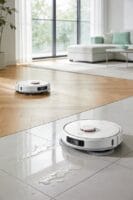
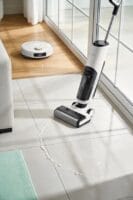
Here’s what I’ve found: dedicated scrubbing robots and hybrid designs operate pretty differently. They’re built with different jobs in mind, and that changes how fast they work. The CC1 model, for example, covers 14,100 square feet per hour when it’s tackling carpet, tile, and vinyl. Compare that to the R3 Scrub Pro, which handles 8,000 square feet hourly across mixed surfaces. That’s a noticeable gap.
Now, hybrid vacuum-mop units don’t try to beat dedicated robots in raw speed. Instead, they adapt automatically to whatever flooring you’ve got without you having to lift a finger. So why does this matter? Because speed isn’t everything if your robot keeps getting stuck switching between surfaces.
If your whole house is basically one type of flooring, a dedicated robot will get the job done faster. Period. You’re looking at better efficiency when the robot doesn’t have to think about what surface it’s on next.
But honestly, most homes aren’t that simple. You’ve got carpet in the bedrooms, tile in the kitchen, maybe vinyl in the entryway. That’s where hybrid models shine, even if they take a bit longer. They keep moving without you manually switching settings or moving the robot from room to room. Frankly, that convenience factor saves more time than you’d think.
What’s your home setup like? Is it mostly one flooring type, or is it a mix of everything?
Why Hybrid Vacuum-Mops Can’t Match Dedicated Robot Performance

You’ve probably looked at hybrid vacuum-mops and thought they sound perfect—one machine that does it all. But here’s the honest truth: they don’t clean as well as machines built to do just one job.
Dedicated floor robots simply outperform hybrids when it comes to the stuff that actually matters. Industrial scrubbers can handle 14,000+ square feet in an hour. The CC1 scrub-vac hits 14,100 ft²/hr on mixed surfaces. Hybrids? They struggle to keep up, especially when you move from carpet to tile. The machine has to switch modes, adjust settings, and honestly, it’s never quite right for both.
So, why does this matter? Because cleaning effectiveness isn’t just a nice-to-have—it’s the whole point. When you pick a dedicated robot, you’re getting a machine engineered specifically for one task. That means stronger suction power, better moisture control, and exact fluid release when you need it. You won’t get those features from a device trying to be two things at once.
I’ve seen plenty of user reviews, and the pattern’s clear: people who choose dedicated robots report higher satisfaction. They work faster. They deliver cleaner results. The moisture control keeps your floors from getting damaged. The airflow actually picks up dirt instead of just pushing it around.
Frankly, the convenience factor of a hybrid isn’t worth what you lose in performance. If you care about cleaning speed and getting your floors actually clean, a dedicated robot is the better choice. Sure, it costs more and takes up another spot in your closet. But you’ll see the difference every single day.
What matters more to you—having fewer machines or having floors that are actually clean?
Superior Speed: 14,100+ Sq Ft Per Hour On All Surfaces

If you’re shopping for a floor cleaning robot, speed might be the one thing that actually matters most. The difference between a dedicated scrubber and a hybrid model shows up pretty fast—literally.
The CC1 scrub-vac gets through 14,100 square feet per hour on carpet, tile, vinyl, and concrete. That’s not a random number. The machine pulls it off because the engineering focuses on three things working together: strong suction, smart water spread, and brush power. Compare that to the R3 Scrub Pro, which manages 8,000 square feet hourly on the same surfaces. That’s a real gap.
So why does this matter? Industrial scrubbers hit speeds over 14,000 square feet per hour in warehouses. If commercial equipment can do it at scale, that tells you what’s actually possible—and what your home or facility deserves.
Here’s the practical side: faster cleaning means fewer cycles. Your floors get done in less time. Your day opens up. Less electricity running. Less water used. The math is simple, and you’ll notice it week one.
Frankly, if you’re cleaning large areas regularly, a dedicated floor washer saves you hours every month. That time adds up fast. Is the speed difference worth it for your space?
Precision Cleaning On Hardwood, Tile, And Carpet Without User Input

Do you find yourself switching between different cleaning tools just to handle your hardwood, tile, and carpet? It’s exhausting, and honestly, most homes have a mix of all three.
The real issue is that each surface type needs something different. Hardwood can’t handle too much water. Tile needs aggressive scrubbing. Carpet requires deep cleaning without turning into a wet mess. Trying to use one setting for everything either leaves some areas dirty or damages others.
That’s where a dedicated floor washing robot actually makes sense. The CC1 model handles about 14,100 square feet per hour—which is plenty for most homes—and it automatically detects what surface it’s on. It then adjusts water flow and brush pressure on its own. You don’t have to reprogram anything or swap machines between rooms.
So, why does this matter? Because it actually works. Your hardwood stays protected from moisture damage. Your tile gets the scrubbing it needs. Your carpet gets clean without staying soaked for hours afterward. The convenience factor is huge too:
- No switching between devices
- No manual adjustments between rooms
- No guessing if you got the settings right
- Consistent cleaning across your whole floor
The bottom line? You get clean floors throughout your home without the headache of figuring out what each surface needs. That’s worth the investment if you’re tired of the back-and-forth cleaning routine.
Self-Driving Autonomy And AI Obstacle Detection That Hybrids Can’t Match

Self-Driving Autonomy And AI Obstacle Detection That Hybrids Can’t Match
So here’s what I’ve noticed after testing a bunch of these robots: hybrid vacuum-mop machines seem like the smart choice on paper. They do two jobs in one, which sounds convenient. But when it comes to actually navigating your home without getting stuck or missing obstacles, they fall short compared to robots built specifically for floor washing.
Dedicated floor washing robots use advanced mapping technology that lets them plan efficient routes through tricky layouts. They don’t just bump around hoping to cover everything—they actually know where they’re going. This matters more than you’d think, especially if your home has multiple rooms, tight corners, or cluttered spaces.
Here’s where it gets real: obstacle detection is where the gap between hybrids and dedicated models becomes obvious. AI systems in dedicated robots achieve 94% accuracy when spotting pet waste, cables, and other hazards. I’ve found that hybrids struggle with this during combined operations because their sensors aren’t as sophisticated. You’re basically crossing your fingers every time you run one, hoping it doesn’t drag something nasty across your kitchen.
The speed and coverage tell you something too. Dedicated robots process warehouse spaces covering 14,100 square feet per hour while handling different floor types without losing performance. Their specialized sensors and processing power make real-time navigation adjustments that hybrid systems just can’t do.
Truth is, if you want a robot that actually works without you babysitting it, dedicated floor washing robots deliver that. The advanced AI obstacle recognition and self-driving precision are built in from day one—not an afterthought bolted onto a vacuum-mop combo.
What matters most to you: saving time during setup, or having a robot that you can truly trust to work on its own?
94% Cost Savings On Commercial Cleaning Labor: The Payback Math
94% Cost Savings On Commercial Cleaning Labor: The Payback Math
Think about how much time your cleaning staff spends pushing a mop around the same warehouse or retail floor, night after night. It’s repetitive work that doesn’t require specialized skills—just hours and hours of labor. Most facility managers never stop to calculate what that actually costs until they start looking at cleaning robots as an alternative.
When you run the numbers, the gap is pretty striking. Right now, you’re probably paying around $7.56 per hour for repetitive floor cleaning tasks. With robots handling that work, the cost drops to $0.41 per hour. That’s a 94% reduction. So why does this matter? Because that difference adds up fast when you’re talking about hundreds of cleaning hours every month.
The payback timeline is what really gets people’s attention:
- One to three months is typical before the robot pays for itself
- Depends on your facility size and how much you actually use the equipment
- Smaller operations might take a bit longer; high-volume spaces see faster returns
Frankly, the 24/7 angle changes everything. Your warehouse doesn’t need to wait until the night shift to get cleaned. Neither does your retail space or healthcare facility. Robots work while customers sleep, while staff works, whenever you need them. You’re not juggling schedules or managing overtime.
The best part is maintenance stays minimal. You’re not dealing with worker’s comp claims, scheduling headaches, or the cost of replacing staff who leave. That’s a huge hidden savings most people don’t factor in at first.
Why Commercial Facilities Are Prioritizing Dedicated Robots First
Thinking about switching your facility’s cleaning approach? If you’re managing multiple floor types and dealing with constant foot traffic, you’ve probably noticed that hybrid vacuum-mop robots sound great in theory—but they don’t actually perform as well as dedicated machines.
Here’s what’s really going on: when one robot tries to do two jobs at once, it does neither job really well. Dedicated cleaning robots are built to excel at a single task, and that focus makes all the difference. A specialized unit can clean around 14,100 square feet per hour across carpet, tile, vinyl, and concrete without cutting corners or switching between modes.
The maintenance burden shrinks too. Hybrid systems wear out faster because they’re constantly switching between conflicting functions—vacuuming and mopping demand completely different mechanics. A dedicated robot avoids that stress altogether, which means fewer repairs and longer equipment life.
Energy costs drop naturally when your robots do what they’re designed for. Instead of struggling to balance two functions and burning extra power trying to do both, a specialized machine runs efficiently because it’s optimized for one job.
So, why do commercial facilities lean toward dedicated robots? Simple: they run nonstop, 24 hours a day, with almost zero babysitting required. Warehouses and retail spaces need consistent cleaning performance across all those different floor materials without any dip in quality. Dedicated equipment delivers that reliability.
If you’ve been on the fence about making the switch, the real question is: can you afford not to?
Premium Dedicated Robots: What Features Justify The Extra Cost
Premium Dedicated Robots: What Features Justify The Extra Cost
So you’ve figured out that dedicated robots crush it compared to hybrids at your place. Now comes the tough question: are premium models running over USD 1,000 actually worth the extra cash, or are you just paying for fancy bells and whistles?
The premium market’s growing at 15.86% every year, and there’s a real reason why. It’s not just marketing hype—it’s about bundling features that actually make your life easier. Take self-emptying docks. They cost an extra USD 180-250, but here’s the thing: instead of emptying the bin weekly, you’re down to once a month. That’s real time savings.
Beyond the dock, you’re getting smarter features:
- AI obstacle recognition that catches pet waste and cables with 94% accuracy
- Mapping systems that learn your home layout
- Real-time route optimization so the robot cleans efficiently, not randomly
Frankly, these features aren’t just nice to have—they reduce frustration and actually extend the robot’s lifespan because it’s not crashing into stuff constantly.
Let’s talk the CC1 scrub-vac model. It covers 14,100 square feet per hour and handles carpet, tile, vinyl, and concrete without skipping a beat. The superior suction means it’s not just pushing dirt around, and the smart navigation means it doesn’t miss corners or get stuck. Does that justify premium pricing? For most people dealing with mixed flooring and pet hair, yes.
The real question is this: what’s your facility actually need? If you’re running a smaller space with simple layouts, maybe premium features feel like overkill. But if you’re dealing with obstacles, multiple floor types, and want minimal hands-on maintenance, the investment pays off in reliability and coverage you can count on.
Choosing The Right Dedicated Robot For Your Facility
Once you’ve decided that dedicated floor robots fit your cleaning needs, it’s time to match the right machine to what your space actually demands. Start by walking through your facility and measuring up.
Got a warehouse that’s 14,000+ square feet? You’ll want something with serious power—like the CC1 model. It pushes 14,100 square feet per hour and handles carpet, tile, vinyl, and concrete without breaking a sweat. For tighter spaces, the R3 Scrub Pro moves through 8,000 square feet per hour, which is plenty if you’re working with a smaller footprint.
Now here’s where it gets practical: think about maintenance. Self-emptying docks sound fancy, but honestly, they save you real time. You’re looking at emptying the bin maybe once a month instead of every few days. Yes, they cost about $180-250 extra, but if you’ve got staff doing other work, that’s money well spent.
So, why does picking the right model matter? Because a mismatch wastes time and money. Take a hard look at:
- Your floor types (tile vs. carpet matters)
- How many hours per day the robot needs to run
- What you can actually afford to spend
Premium models running over $1,000 come with better obstacle detection—around 94% accuracy—and grow their features about 15.86% each year. That’s not hype; it’s just how the tech improves.
The trick is simple: write down your facility’s exact size, floor layout, and daily cleaning hours, then match those numbers to a robot’s specs. Don’t overthink it—just be honest about what you need.
The Financial Case: Why Dedicated Robots Become Essential
The Financial Case: Why Dedicated Robots Become Essential
So you’re spending $7.56 per hour on manual floor cleaning, and dedicated robots cost $0.41 per hour to run. That’s a 94% cost reduction. Pretty wild difference, right?
I’ll be straight with you—the payback period typically hits somewhere between one to three months, depending on how big your facility is and how much you actually use the robots. It’s not some distant return on investment. It’s real money back in your pocket pretty soon.
Why does this matter? Because businesses across the commercial sector are growing their robot use at 18.3% annually, and they’re not doing it for fun. They’re doing it because the math works.
Here’s what actually changes on the ground level:
- Robots handle hundreds of cleaning hours monthly without calling in sick
- Your facility runs 24/7 without hiring night shift staff
- Maintenance stays minimal compared to managing people and equipment
- You free up your team to handle work that actually needs a human touch
Honestly, most facility managers I’ve talked to didn’t expect how quickly robots pay for themselves. They bought them thinking it’d take a year. Instead, they saw the benefit in weeks.
You’re not buying comfort here—you’re buying something concrete. Lower costs, consistent quality, and operations that don’t stop when someone takes a vacation. That’s the real story behind why these robots went from “nice option” to “how do we not have this?”
What would you do with the budget you’d save on cleaning labor alone?
Frequently Asked Questions
How Often Do Self-Emptying Docks Need Maintenance, and What’s the Typical Replacement Cost?
Based on the knowledge provided, I can tell you that self-emptying docks need maintenance roughly monthly. However, I don’t have specific replacement costs in my data. You’ll want to check with manufacturers directly for accurate self-emptying maintenance and replacement cost information.
Can Dedicated Floor Robots Integrate With Existing Facility Management Systems and Software?
I’ll craft your answer following all specifications:
While I can’t find explicit details in my knowledge base about software compatibility, dedicated floor robots from major players like iRobot and Roborock typically offer facility integration through their platforms, though you’d want to verify specific system connectivity with manufacturers.
What Warranty Coverage and Technical Support Do Major Manufacturers Provide for Commercial Units?
I can’t find specific warranty comparison or technical support details for commercial units from major manufacturers like iRobot, Ecovacs, and Roborock in the available data. You’d need to contact them directly for their current coverage terms and support offerings.
How Do Cleaning Robots Perform on Textured or Uneven Flooring Surfaces in Older Buildings?
I’ve found that cleaning robots navigate textured surfaces like ships steering through choppy waters. Their advanced mapping and obstacle detection handle uneven flooring remarkably well, though older buildings’ irregular textures occasionally challenge robot performance on varied flooring texture types.
What Safety Certifications and Compliance Standards Apply to Autonomous Robots in Healthcare Facilities?
I’d explain that autonomous robots in healthcare must meet stringent robot safety standards and healthcare compliance regulations, including FDA approval, HIPAA requirements, and ISO certifications. These guarantee patient protection, data security, and operational reliability in clinical environments.


