As an Amazon Associate, we earn from qualifying purchases. Some links on this site are affiliate links at no extra cost to you. Our recommendations are based on thorough research and editorial judgment.


The Rise of Robotic Gutter Cleaners and Roof Maintenance Tech

Robotic gutter cleaners deliver 45-46% faster results than manual methods while eliminating ladder-related injuries. You’ll find these systems reduce labor time considerably, applying consistent pressure across gutters without fatigue. AI-enabled models now map your home’s layout, identifying dirt-prone areas and automatically adjusting cleaning schedules. The industry projects $550 million growth by 2034, driven by commercial adoption rates of 9-19% annually. Your choice between vertical and horizontal systems depends on home layout and overhang clearance. Understanding which configuration suits your property reveals substantial efficiency gains.
Key Takeaways
- Robotic gutter cleaners deliver 45-46% better results and faster completion times compared to traditional manual cleaning methods.
- Safety improvements eliminate ladder-related injuries by keeping homeowners and service providers on the ground during maintenance.
- The gutter cleaning industry is projected to reach $550 million by 2034, driven largely by robotic technology adoption.
- AI-enabled systems map homes, track dirt buildup, and automatically adjust cleaning schedules based on environmental factors.
- North America experiences 6.5-15% annual growth as harsh winters and heavy rainfall accelerate homeowner upgrades to robotic solutions.
Why Gutter Cleaning Is Shifting From Ladders to Robots
You may be interested


Tired of climbing a ladder every few months to scoop out leaves and debris? You’re not alone. Traditional gutter cleaning is dirty, dangerous, and honestly, a huge pain. Falls from ladders cause thousands of injuries each year, and the physical toll on your back and joints isn’t worth it.
That’s where robotic gutter cleaners come in. These little machines can handle the job without you risking your neck—literally. They deliver about 45-46% better results than doing it by hand, which means fewer trips up a ladder and less time spent on maintenance overall.
Here’s what makes them actually worth considering:
- Autonomous navigation: The robots figure out their own path without needing someone to guide them
- No climbing required: Your body stays safely on the ground
- Fewer repeat visits: Better cleaning means you’re not dealing with clogs as often
So, why does this matter? Because your time and safety have real value. Vertical vacuum designs are the most popular right now since they move around gutters more easily. If you’ve got tight spaces or low-hanging gutters, horizontal models are gaining traction fast because they fit where other options can’t.
Frankly, the numbers tell the story. The gutter cleaning industry is expected to hit about $550 million by 2034, growing roughly 12.5% every year. That growth? It’s almost entirely driven by homeowners like you switching to robotic solutions.
The best part is you don’t have to be a tech person to use these. They just work. You set them up, let them do their thing, and your gutters stay clean without the risk or the backache.
Ready to ditch the ladder for good?
How Robotic Gutter Cleaners Outperform Manual Labor
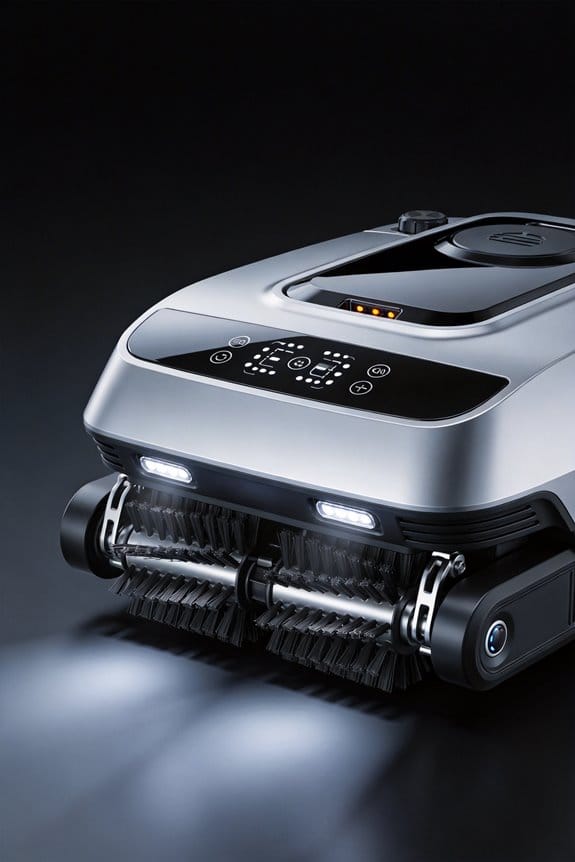
If you’re tired of climbing ladders every few months to scoop out leaves and debris, robotic gutter cleaners might be exactly what you need. They’re not just a trendy upgrade—they actually work better than doing it by hand.
Let me break down the numbers. These robots cut your labor time by 45-46% compared to manual cleaning. That means fewer hours spent on a ladder, and honestly, that translates to real money saved if you’re hiring professionals. Service companies can send one technician instead of two, and they finish faster. Your bill reflects that.
Here’s what makes the difference in day-to-day performance:
- Robots work at a steady pace without getting tired or sloppy
- They apply consistent pressure across every section of your gutters
- They follow the same pattern every time, so nothing gets missed
- You skip the injury risk that comes with ladder work
Why does this actually matter to you? Because your gutters get cleaned thoroughly, and you avoid the whole ordeal of setting up ladders, worrying about falls, or paying for emergency room visits. The consistency alone is worth it—there’s no such thing as a robot having an off day.
The best part is the safety angle. No more balancing on shaky ladders or dealing with the anxiety that comes with height work. For homeowners with mobility issues or those who just want peace of mind, that’s huge. Service providers benefit too, since they’re not dealing with workplace injuries.
When you add it all together—less time, fewer workers, better results, and zero safety headaches—the value is pretty obvious.
Vertical vs. Horizontal Gutter Vacuum Systems: What Actually Works Better
Vertical vs. Horizontal Gutter Vacuum Systems: What Actually Works Better
So you’re standing on a ladder, staring at your gutters, and wondering which vacuum setup won’t leave your arms screaming by day’s end. That’s the real question most homeowners face, and honestly, there’s no one-size-fits-all answer.
Let me break down what I’ve learned from talking to people who actually use these things. Vertical vacuums own the market for a reason—they’re easier to handle, less tiring over time, and work great for standard gutters on most homes. If you’ve got typical roof heights and decent access, you’ll probably reach for a vertical model again and again.
But here’s where it gets interesting: horizontal models excel when you’ve got tight spaces. Low overhangs, covered porches, narrow gaps between roof lines—that’s where vertical cleaners get stuck. Horizontal designs let you angle and maneuver in ways that feel almost impossible with the other type.
Truth is, your home’s layout should drive this choice, not the other way around.
Think about your specific situation:
- Are your gutters at standard height with open access?
- Do you have low-clearance areas, tight roof corners, or dense landscaping blocking your path?
- How often do you actually clean? (This matters more than you’d think.)
Both models now include smart features that track dirt buildup patterns and suggest optimal cleaning schedules. It’s a nice perk, though nothing replaces knowing your own roof.
The best approach? Walk around your house and identify your problem areas before you buy. You’re not choosing a design philosophy—you’re solving a specific problem on your property. Which areas of your gutters give you the most trouble right now?
How AI Is Transforming Robotic Gutter Cleaning

Tired of climbing a ladder every few weeks just to fish out leaves and debris? The right vacuum design gets you started, but here’s where it gets interesting—AI actually changes the whole game by teaching your system what your home specifically needs.
Modern robotic gutter cleaners can now map out your entire house, including multiple floors, and figure out where dirt builds up the most. They learn from your roof’s angle, nearby trees, and what the weather does each season. That means instead of cleaning on a random schedule, your system cleans when and where it actually matters. So, why does this matter? Because you’re not wasting time or energy on unnecessary passes.
The real benefit shows up in preventing problems before they happen. These systems dig through past cleaning data and alert you before a clog actually forms. You stop getting those panic calls about water backing up into your gutters. Your emergency service visits drop way down, and so does your bill.
Try this: look for systems with machine learning that recognize pet waste. It’s a smaller feature, but it keeps your gutters sanitary without you having to do a thing. Honestly, that peace of mind is worth it alone.
Integration with your smart home setup ties everything together. Your cleaning schedule adapts automatically based on your specific conditions—the trees around your house, how much it rains, all of it. Everything runs on its own while you focus on other stuff.
The best part is that smarter cleaning means fewer unnecessary cycles, which saves you money on electricity and wear-and-tear. You’re getting a system that works *with* your home instead of against it. What would it feel like to not think about gutter maintenance for months at a time?
Why Robotic Gutter Cleaning Services Are Scaling Commercially
Why Robotic Gutter Cleaning Services Are Scaling Commercially
If you’ve noticed your local gutter cleaning companies suddenly talking about robots instead of ladders, you’re not imagining it. This shift from neighborhood handymen to structured service companies isn’t random—it’s driven by real market demand and numbers that actually make sense.
Robotic gutter cleaners get the job done 45-46% faster than doing it by hand. That’s a huge deal because it means fewer labor hours, lower costs, and faster turnaround times for customers. Companies like Ned Stevens and GutterMaid have figured this out, which is why they’re dominating with 48% combined market share between them.
So why does this matter to you? Because when big players invest in automation, prices come down and service quality stays solid. You get better work at more competitive rates.
The numbers tell the real story. The gutter services industry is expected to hit USD 0.55 billion by 2034, growing at 12.5% annually. That’s not hype—that’s money moving into a sector that’s becoming more professional and efficient.
What’s changing on the ground:
- Residential customers get faster appointments
- Commercial properties (hotels, hospitals, offices) now have reliable large-scale cleaning solutions
- Local providers who adopt robot systems can expand without hiring tons of new people
Truth is, your neighborhood’s probably already feeling this shift. Service providers are targeting bigger clients and handling more jobs with the same crew size. The robots handle the physical work, and the people handle customer service and running the business.
If you’re thinking about hiring a gutter cleaning service, you’re actually benefiting from this trend. Better efficiency means better pricing and more reliable scheduling.
Where Robotic Adoption Is Fastest: Regional Growth Drivers
Where Robotic Adoption Is Fastest: Regional Growth Drivers
Ever noticed how your neighbor just bought a robot to clean their gutters, but your friend across the country thinks that’s ridiculous? That’s because where you live actually determines whether robotic cleaning tools take off or flop. Geography shapes everything about this market—way more than most people realize.
North America’s seeing solid growth in robotic gutter and roof cleaning, with annual increases hitting 6.5-15% depending on where you are. The reasons vary by region though. In areas with harsh winters or heavy rainfall, homeowners are upgrading faster because they’re tired of dealing with debris buildup. Plus, the home maintenance culture here is pretty strong—people actually budget for upgrades, especially when they can get AI features that make the job smarter.
Asia-Pacific is honestly dominating the whole household robots sector right now. Chinese brands control about 62% of vacuum shipments, which means the competition is fierce. So why does this matter for you? Well, if you’re trying to figure out which market to focus on, understanding that level of saturation helps you decide whether to compete there or look elsewhere.
The Middle East is actually your hidden opportunity. Household robot adoption is expanding rapidly in that region, even though it’s still working through some growing pains.
Now, here’s where things get real: small providers everywhere are struggling. Honestly, about 37% of them run into environmental and safety compliance issues that end up costing them real money. Meeting regulations isn’t cheap, and it eats into profit margins fast.
Why Robotic Gutter Adoption Lags Behind Other Smart Home Tech
Why Robotic Gutter Adoption Lags Behind Other Smart Home Tech
Ever wonder why your neighbor has a robot vacuum but you’ve never heard of a robot that cleans gutters? There’s a real disconnect here, and it’s worth understanding.
Robotic gutter cleaners actually work better than doing it by hand—we’re talking 45-46% more efficient. Yet most homeowners don’t even know they exist. You probably haven’t seen them advertised on TV or mentioned by friends, right? That’s the first problem. People are buying smart vacuums by the millions, but gutter robots stay buried in obscurity.
The practical hurdles are real:
- Installation isn’t simple. Unlike plugging in a vacuum, these systems need professional setup and roof access. It’s a bigger ask than most smart home gear.
- They cost a lot more. Price is a genuine barrier for budget-conscious families trying to automate their homes.
- You don’t need them often. Gutters get cleaned once or twice a year, not daily. That makes the investment feel less urgent.
So why does this matter? Frankly, it comes down to what feels necessary. Indoor cleaning happens constantly, so a robotic vacuum feels essential. Gutter maintenance? It’s seasonal and easy to forget about until you’re standing on a ladder in the fall.
The market data backs this up—residential vacuum cleaners are flying off shelves while exterior maintenance tech barely moves. Consumers have decided they’d rather automate what happens inside their homes.
If you’re thinking about your gutters, ask yourself: would you actually use a robotic system enough to justify the cost, or is the twice-yearly manual cleaning just part of homeownership for you?
Starting Your Robotic Gutter System: Residential vs. Commercial
Tired of climbing a ladder every few months to clean gutters? Let’s talk about whether a robotic gutter system actually makes sense for your situation—because the residential versus commercial choice really does matter.
Residential Systems: Keep It Simple
Most homeowners don’t need industrial-grade equipment. Residential robotic systems are built for affordability and straightforward installation. You’re looking at compact units that work fine on standard gutters, and they’ll cut your cleaning time by about 45-46% compared to doing it yourself. The setup? Minimal fuss. You’re not tearing apart your roofline or rewiring anything major.
Commercial Systems: Built to Handle the Heavy Lifting****
Now, if you’re managing multiple buildings—say you’re running a hotel chain or a hospital network—you need something completely different. Commercial systems are engineered tough. They handle high-volume, continuous operation without breaking a sweat, and they’ve got advanced mapping so they can adapt to different gutter layouts. Frankly, the growth rate speaks for itself: commercial adoption jumps 9-19% every year because businesses realize the labor savings add up fast.
So, why does this distinction matter to you?
Here’s the Real Breakdown
Your decision comes down to three things: How many properties are you dealing with? What’s your budget looking like? How often do your gutters actually need cleaning?
- Single property = residential makes sense
- Multiple buildings = commercial is worth the investment
- Budget-conscious homeowner = residential is the way to go
- Facility manager handling dozens of locations = commercial pays for itself
Residential setups prize simplicity. You want something that works, doesn’t demand constant tweaking, and fits your home’s existing setup. Commercial installations do the opposite—they prioritize durability and consistent performance even when you’re throwing totally different gutter configurations at them.
Pick the wrong one, and you’re either overspending on features you don’t need or stuck with something that can’t scale when your needs grow.
Frequently Asked Questions
What Is the Projected Market Value for Robotic Gutter Cleaners by 2034?
I’ll cut to the chase—the gutter cleaning market’s projected to hit USD 0.55 billion by 2034. That’s explosive growth, and I’m seeing it driven by strong market trends and rising consumer demand for automated home maintenance solutions that save time and effort.
Which Chinese Brands Currently Dominate the Global Robotic Vacuum Cleaner Market?
I’ll tell you that Chinese brands Roborock, Ecovacs, and Dreame dominate the global robotic vacuum market, holding 62% of shipments. They’re leveraging Xiaomi innovation, Roborock technology, and Ecovacs expansion, while Huawei competition’s intensifying.
How Do Small Gutter Service Providers Overcome Environmental and Safety Compliance Costs?
I’d recommend you prioritize cost management by investing in thorough safety training for your team—it prevents costly violations. You’ll also benefit from joining industry associations that offer compliance resources and bulk purchasing discounts on safety equipment.
What Sustainability Materials Are Used in Modern Gutter Installation in the U.S.?
I’ll tell you what’s revolutionizing gutters—because apparently we’ve finally discovered that aluminum and PVC-free materials exist! In 2023, I’m seeing 58% of U.S. modern installations embracing recyclable aluminum, proving sustainable materials aren’t just trendy; they’re becoming standard practice.
How Do Companion Robots Like Elliq Differ From Traditional Robotic Vacuum Cleaners?
I’d explain that ElliQ and similar companion robots prioritize interactive robotic features for elderly engagement, offering 90% daily interaction rates. Unlike vacuum cleaners focusing on cleaning tasks, companion technology emphasizes social connection and senior care—growing at 16.31% CAGR, outpacing traditional vacuums.


