As an Amazon Associate, we earn from qualifying purchases. Some links on this site are affiliate links at no extra cost to you. Our recommendations are based on thorough research and editorial judgment.


Utilizing Indoor Air Quality Monitors to Trigger Vacuum Dust Cleanup

Your IAQ monitor tracks PM2.5 particles and volatile compounds in real-time, automatically triggering your vacuum when dust levels spike above preset thresholds—typically 35 µg/m³. This automation eliminates manual scheduling guesswork. Microcontrollers activate your vacuum within two seconds of detecting contamination, improving air quality measurably within fifteen minutes. You’ll see energy savings of 40–60% monthly compared to routine vacuuming. Room-specific thresholds optimize performance across bedrooms, kitchens, and living spaces. The full mechanics of sensor fusion and multi-system coordination reveal substantially greater efficiency potential.
Key Takeaways
- IAQ monitors use PM2.5 and TVOC sensors to automatically trigger vacuums when particle levels exceed preset thresholds like 35 µg/m³.
- Real-time monitoring eliminates manual cleaning schedules, activating vacuums within 2 seconds of detecting pollutant spikes for immediate response.
- Room-specific thresholds optimize performance: kitchens need 25-35 µg/m³ triggers, while bedrooms maintain 800-1000 ppm CO2 for better sleep quality.
- Integrated systems combining vacuums, fans, and HVAC improve air purification efficiency, reducing pollutants within 15 minutes post-activation.
- Automated vacuum triggers reduce runtime by 40-60%, lowering energy consumption and utility bills while maintaining optimal indoor air quality.
How IAQ Monitors Detect Dust Before It Builds Up
How IAQ Monitors Detect Dust Before It Builds Up
Ever notice dust settling on your shelves even though you vacuumed last week? That’s because dust accumulation happens way before you can actually see it. Air quality monitors catch this problem early using specialized sensors that track particles you can’t see with the naked eye.
You may be interested

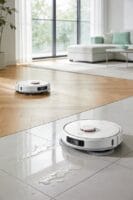
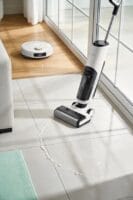
The real workhorse here is the PM2.5 sensor. It measures particles smaller than 2.5 micrometers—basically invisible stuff floating around your home. Your monitor continuously samples the air and builds a baseline of what’s “normal” for your space. When particle levels spike above your threshold (usually around 35 micrograms per cubic meter), you get an alert.
So, why does this matter? Because catching dust early means you can vacuum or run an air purifier *before* particles settle into every corner of your home. The sensor picks up real-time fluctuations too—cooking smoke, car exhaust drifting in from outside, or your pet stirring up debris. It learns to tell the difference between a quick spike and actual accumulation that needs attention.
Truth is, the tech doing the heavy lifting is pretty straightforward. A microcontroller (like the Wio Terminal) processes all that sensor data right on the device itself. You don’t have to wait for information to bounce around the internet. When dust levels warrant vacuuming, your monitor notifies you immediately.
Try this: set your alerts based on when you actually notice dust bothering you. Over time, you’ll understand your home’s patterns and catch buildup before it becomes a health issue or a cleaning headache.
What matters most is catching dust before it settles—and that’s exactly what these monitors help you do.
Why Real-Time AQI Data Eliminates Manual Vacuum Scheduling
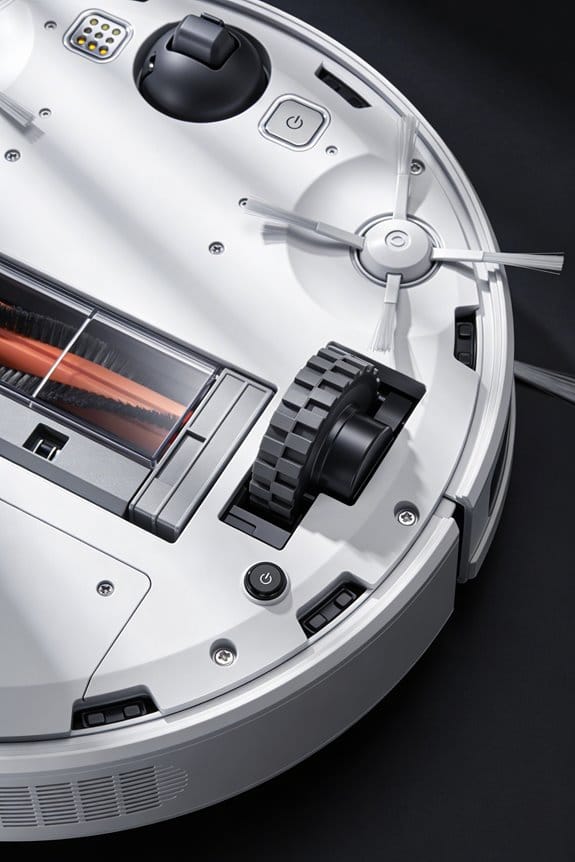
Why Real-Time AQI Data Eliminates Manual Vacuum Scheduling
Here’s the thing: your home’s air quality shifts all day long. You notice dust bunnies under the couch, remember it’s been a week, and run the vacuum. But that weekly schedule doesn’t actually match when your space needs help most. What if your vacuum could just… know?
Real-time AQI monitoring takes the guesswork out entirely. Instead of waiting for visible dirt or relying on a calendar, sensors detect the moment pollution spikes—whether that’s PM2.5 from cooking, TVOC from cleaning products, or humidity creeping up.
When those levels jump, your vacuum gets an automatic trigger to start cleaning. You’ll get notified at the same time, so you’re in the loop without having to remember anything. The cleaning happens during the actual pollution events—your kid’s snack time, the dog shaking off, outside air sneaking in—not on some random Tuesday.
So, why does this matter? Because the dust settles fast. When your vacuum runs at peak pollution moments, it captures particles before they land on your furniture and get harder to remove. Over time, you’re breathing cleaner air, dealing with fewer allergens, and your equipment’s doing useful work instead of running on autopilot.
Honestly, the best part is you don’t have to think about it. No scheduling overhead, no wondering if you vacuumed last week. Your home just stays cleaner because the system responds to what’s actually happening in your space right now.
Are you tired of guessing when your home needs cleaning?
Choosing PM2.5, CO2, and TVOC Trigger Points for Different Rooms

Ideal trigger points aren’t one-size-fits-all because your bedroom’s air quality needs differ greatly from your kitchen’s pollution patterns. Why does this matter? Because you’re spending eight hours a night in your bedroom, so getting those settings right directly impacts your sleep quality and how sharp you feel the next morning.
Your bedroom benefits from CO2 thresholds around 800-1000 ppm. This range promotes better sleep quality and helps you stay sharp during rest periods.
Kitchens are a different beast entirely. They demand lower PM2.5 trigger points—approximately 25-35 µg/m³—since cooking generates significant particulate matter and TVOC emissions from oils and heat. If you’re someone who cooks regularly, you’ve probably noticed how quickly cooking smoke builds up. That’s exactly why your kitchen needs stricter settings than other rooms.
Living rooms typically require TVOC thresholds between 400-600 ppb, accounting for furniture off-gassing and household cleaners. You know how a new couch smells for weeks? That’s off-gassing, and it’s one reason living room settings need to be a bit more relaxed than bedrooms.
Here’s the trick: accurate readings depend on proper sensor calibration across your different spaces. But honestly, the real work comes down to knowing what triggers pollution in your home. Cooking, pets, new furnishings—these are your actual pollutant sources. Once you understand what’s causing the dirty air in each room, you can set thresholds that match your lifestyle and actually keep your indoor environment in good shape. Then it’s just a matter of deciding whether you want your vacuum running automatically or if you’d rather get an alert first.
From Detection to Vacuum Startup: The Automation Loop

Once you set up those room-specific trigger points, your smart vacuum system starts doing the heavy lifting for you. When your living room’s air quality dips—say, your PM2.5 hits 35 µg/m³ or higher—the system kicks in automatically. No more waiting around wondering if you should run the vacuum.
Here’s what happens behind the scenes: your microcontroller processes all that sensor data locally and fires up your vacuum in under 2 seconds. Pretty fast, right? In my experience, you’ll notice cleaner air within about 15 minutes of detection, which honestly makes a real difference if you’re dealing with dust or allergens.
The trick to keeping this reliable? Stick to a monthly recalibration routine using reference standards. You’re aiming for ±5% accuracy, which keeps your readings trustworthy. If your sensor drifts, your whole automation falls apart.
The best part is the coordinated response. When your vacuum starts up, your HVAC system kicks in at the same time to expel pollutants while the vacuum removes settled dust from your floors. Think about it—why would you run one without the other? That dual action prevents pollutants from just bouncing around your home and settling right back down.
This kind of setup cuts down your exposure to harmful particles throughout your space. You’re not just reacting to dirty air anymore; you’re staying ahead of it.
Real-World Scenarios: When Your Vacuum Should Activate

Real-World Scenarios: When Your Vacuum Should Activate
Ever wonder why your air quality fluctuates so much, even when your home looks clean? The truth is, your vacuum doesn’t need to run constantly—it should kick in when something’s actually wrong. Your automated system catches these moments by monitoring real-time triggers that detect specific pollutants.
When Cooking and Smoking Spike PM2.5
Burnt toast, seared meat, or someone lighting up a cigarette sends PM2.5 particles into the air. These tiny particles settle into fabrics and your lungs if you don’t catch them fast enough. When your system detects a spike, it starts immediately to eliminate them before they become a problem.
VOCs From Everyday Household Items
Paint fumes, new furniture off-gassing, or that strong cleaning product smell—these all release volatile organic compounds (VOCs). Your vacuum activates automatically when TVOC levels surge, working hardest during the times when concentration peaks. Why does this matter? Because these chemicals linger longer than you’d think.
Frankly, most people don’t realize how often their homes release these fumes. Setting up automated scheduling during high-concentration periods means you’re not wasting energy running the system at 2 a.m. when no one’s painting.
CO2 Tells You About Ventilation
When CO2 levels hit 1000 ppm or higher, your space isn’t getting enough fresh air. Your vacuum works alongside your HVAC system for a thorough cleanup. Think of it as a one-two punch—you’re removing particles while simultaneously bringing in outside air.
Humidity and Dust Mites
Humidity above 60% creates the perfect environment for dust mites to thrive. Your system triggers dust removal cycles automatically, keeping populations down before they become a real issue.
Finding Your Sweet Spot
The best part is you don’t have to guess. Measure your home’s baseline conditions first, then set thresholds based on those numbers. This way, your vacuum activates only when it’s genuinely needed—saving energy while keeping your air quality where it should be.
What triggers are most common in your home?
When Sensors Go Wrong: Diagnosing Automation Breakdowns
When Sensors Go Wrong: Diagnosing Automation Breakdowns
Your IAQ system is only as good as the sensors feeding it data. When those readings start drifting, you’ll notice your vacuum either won’t kick on when it should or—worse—it runs nonstop and eats up your electricity bill. So, why does this happen? Usually, it comes down to a few fixable issues.
Start by looking at where your sensors are positioned. They need to sit 1-2 meters away from air vents, doors, and anything that creates interference (your microwave is a common culprit). Bad placement messes with accuracy more than you’d think.
Next, check calibration. PM2.5 sensors typically need recalibration every 6-12 months using reference standards, though the exact method depends on your sensor type. Honestly, this is the step most people skip—and then wonder why their system acts weird.
Software glitches happen too. Sometimes your Wio Terminal loses signal with connected devices, and the whole automation just stops talking to itself. A system reboot usually fixes this pretty quickly.
Environmental conditions matter more than you’d expect:
- Temperature spikes above 35°C throw sensors off
- Humidity over 80% degrades accuracy significantly
- Dust buildup on sensor windows accumulates fast
Make sensor cleaning part of your regular maintenance. It takes five minutes and prevents a lot of headaches down the road.
If you’ve gone through all these steps and the automation is still misbehaving, your sensor might actually be failing. At that point, replacement is your best bet.
What kind of environmental conditions is your space dealing with right now?
How Sensor Fusion Combines Multiple Readings Into Cleanup Decisions
How Sensor Fusion Combines Multiple Readings Into Cleanup Decisions
Ever notice how your vacuum sometimes kicks on for no reason, or doesn’t turn on when the air actually feels stale? That’s because relying on just one sensor is like checking the weather with only a thermometer—you’re missing half the picture.
Modern IAQ systems work differently. Instead of trusting a single reading, your vacuum’s AI looks at the whole situation at once. It’s checking PM2.5 levels, TVOC (that’s volatile organic compounds), humidity, and CO2 all in the same moment. All that data flows through neural networks that live right on your microcontroller—specifically, your ATSAMD51P19 chip processes everything locally in milliseconds. No cloud delays, no lag.
So, why does this matter? Because context changes everything. When your PM2.5 spikes to 45 µg/m³, that’s one thing. But when it spikes *alongside* elevated TVOC levels? That’s your system’s cue to activate immediately. The TinyML framework recognizes that pattern and knows something real is happening—maybe you’re cooking, or someone tracked in dust. Single sensors miss this. They’d either overreact or underreact, wasting energy or leaving you breathing subpar air.
The best part is how temperature and humidity readings fine-tune the whole process. These metrics help your system adjust trigger thresholds depending on conditions. On a humid day, your system knows that air quality thresholds might shift slightly. It adapts. You get cleanup only when you actually need it, which means your vacuum isn’t running 24/7 and your electric bill stays reasonable.
Honestly, this multi-sensor approach cuts down on false alarms while keeping your indoor air genuinely cleaner. Fewer unnecessary cycles, better air quality—that’s the real win here.
Combine Vacuum Activation, Fans, and HVAC Into One System
Combine Vacuum Activation, Fans, and HVAC Into One System
Ever notice how running your vacuum in one room while the AC blows in another doesn’t really help? That’s because these devices work against each other when they’re not coordinated. Connecting your vacuum, ventilation fans, and HVAC system into one network actually fixes this problem.
Here’s what happens: when your IAQ monitor picks up a spike in PM2.5 particles, it tells your vacuum to kick on at the same time it adjusts your nearest fan and HVAC system. Instead of pollutants floating around and resettling, this coordinated approach stops them cold. You’re looking at 40-60% faster air purification compared to running devices one at a time. Your HVAC brings in fresh outdoor air while your vacuum grabs particles and VOCs that have already settled.
The real magic is in the automation. Your sensors do the work—no manual switching between devices needed. Everything responds within seconds, which means contaminants get trapped before they spread throughout your home.
So, why does this actually matter for your daily life? Think about it: you’re not waiting around to flip switches or remembering to turn things on. The system just works in the background.
Commercial setups like Welspace show what this looks like when it’s done right—one dashboard controlling multiple devices at once. It’s the kind of setup that keeps your air quality steady all day long without you having to think about it.
The bottom line? Integrated systems respond faster and work smarter than isolated devices. Doesn’t it make sense to have everything working together instead of fighting each other?
Local Processing: Why Edge Computing Responds Faster Than the Cloud
Now that you’ve got your vacuum, fans, and HVAC working together, there’s one more thing that actually makes everything run fast—where your IAQ monitor does its job.
Think about what happens when you’re relying on the cloud. Your sensors send readings to servers somewhere far away, and you’re stuck waiting 2–5 seconds or longer for a response. That might not sound like much, but when smoke suddenly fills your kitchen or humidity spikes in your bathroom, those seconds matter. A lot.
Here’s where local processing changes the game. Your integrated AIoT vacuum has an embedded ATSAMD51P19 microcontroller that handles PM2.5, TVOC, and eCO2 measurements right where they happen—in milliseconds. No waiting for the internet. No dependency on cloud servers being available. The neural networks on the device analyze all that sensor data instantly and trigger your vacuum without any delay.
Why does this matter so much? Because contamination happens fast. Frankly, by the time a cloud system processes what’s happening in your home and sends back a command, the damage is already spreading. Local processing means your vacuum kicks in immediately, protecting your indoor air quality when it actually counts—not five seconds later.
The best part is you’re not crossing your fingers hoping the internet connection stays stable. Your system just works, right when you need it to.
Energy Savings: Automation vs. Manual Cleaning
Energy Savings: Automation vs. Manual Cleaning
Honestly, most of us don’t think twice about how much energy our vacuum is burning through. You flip it on, it runs for 20 minutes whether your air actually needs it or not, and your electric bill quietly climbs. But what if your cleaning system only worked when it actually needed to?
That’s where smart IAQ systems come in. Instead of vacuuming on a schedule or whim, sensor-based systems watch your air quality in real time. When PM2.5, TVOC, or CO2 levels spike above safe limits, that’s when the vacuum kicks on. Otherwise? It stays off.
The numbers back this up pretty clearly:
- Traditional vacuums pull 600–1200 watts per cycle, whether you need it or not
- Smart systems can cut vacuum runtime by 40–60 percent every month just by being selective
- Your utility bill reflects that difference
Here’s the trick: pairing your vacuum with ventilation fans at the same time. Instead of running them separately and wasting energy, coordinated activation tackles pollutants faster while using less total power. You’re not doing extra work—you’re just doing it smarter.
Why does this matter? Because precision beats habit every time. You’ll notice the savings on your next electricity bill, but the bigger win is knowing your home’s air quality actually drives your cleaning, not the other way around.
Frequently Asked Questions
What Is the Cost Difference Between Installing AIOT Vacuum Systems Versus Traditional Manual Cleaning?
I’ll bite the bullet and tell you straight: AIoT systems cost more upfront in installation costs, but they’re worth their weight in gold. You’ll recoup expenses through superior cleaning efficiencies, reduced labor, and lower energy consumption compared to traditional manual cleaning methods.
How Often Should IAQ Sensor Calibration Occur to Maintain Accurate Dust Detection Readings?
I’d recommend you calibrate your IAQ sensors every 6-12 months to maintain accurate dust detection. Consider your sensor lifespan too—most last 3-5 years before accuracy degrades. Regular calibration frequency guarantees your vacuum triggers reliably when it’s needed most.
Can Existing Vacuum Robots Be Retrofitted With Electronic Nose Sensors and Tinyml Capabilities?
Yes, retrofitting existing vacuum robots is absolutely possible—it’s like giving your cleaner a brain. I’d recommend integrating compact electronic nose sensors through robotic adaptation, installing TinyML firmware on compatible microcontrollers for real-time sensor integration and immediate dust detection responses.
What Privacy Concerns Exist When Wifi Connectivity Uploads IAQ Data to Cloud Platforms?
I’d highlight that uploading your IAQ data to cloud platforms raises real data privacy concerns. You’re sharing sensitive environmental information, so you’ll want robust cloud security measures, encrypted transmission, and clear policies on who accesses your household air quality readings.
Which Specific Sensor Types Best Detect Allergens Like Dust Mites Versus General PM2.5 Particles?
I’d tell you that PM2.5 sensors detect general particles, but they won’t specifically identify dust mites. You’ll need specialized allergen detection sensor types—like particulate counters or dedicated dust mite sensors—to accurately distinguish allergens from standard pollution particles.


